
IGCSE Biology: Excretion in Humans
Complete Cambridge IGCSE Biology guide covering excretion, the urinary system, kidney structure, nephrons, urine formation, selective reabsorption, dialysis and kidney transplant.
Learning Objectives
What is Excretion?
Excretion is the removal from organisms of toxic materials, waste products of metabolism and substances in excess of requirements.
| Waste Product | Where It Comes From | How It Leaves the Body |
|---|---|---|
| Carbon dioxide | Aerobic respiration | Exhaled from the lungs |
| Urea | Breakdown of excess amino acids in the liver | Removed by kidneys in urine |
| Excess water | Food, drink and respiration | Urine, sweat and exhaled air |
| Excess mineral ions | Diet | Urine and sweat |
Human Urinary System
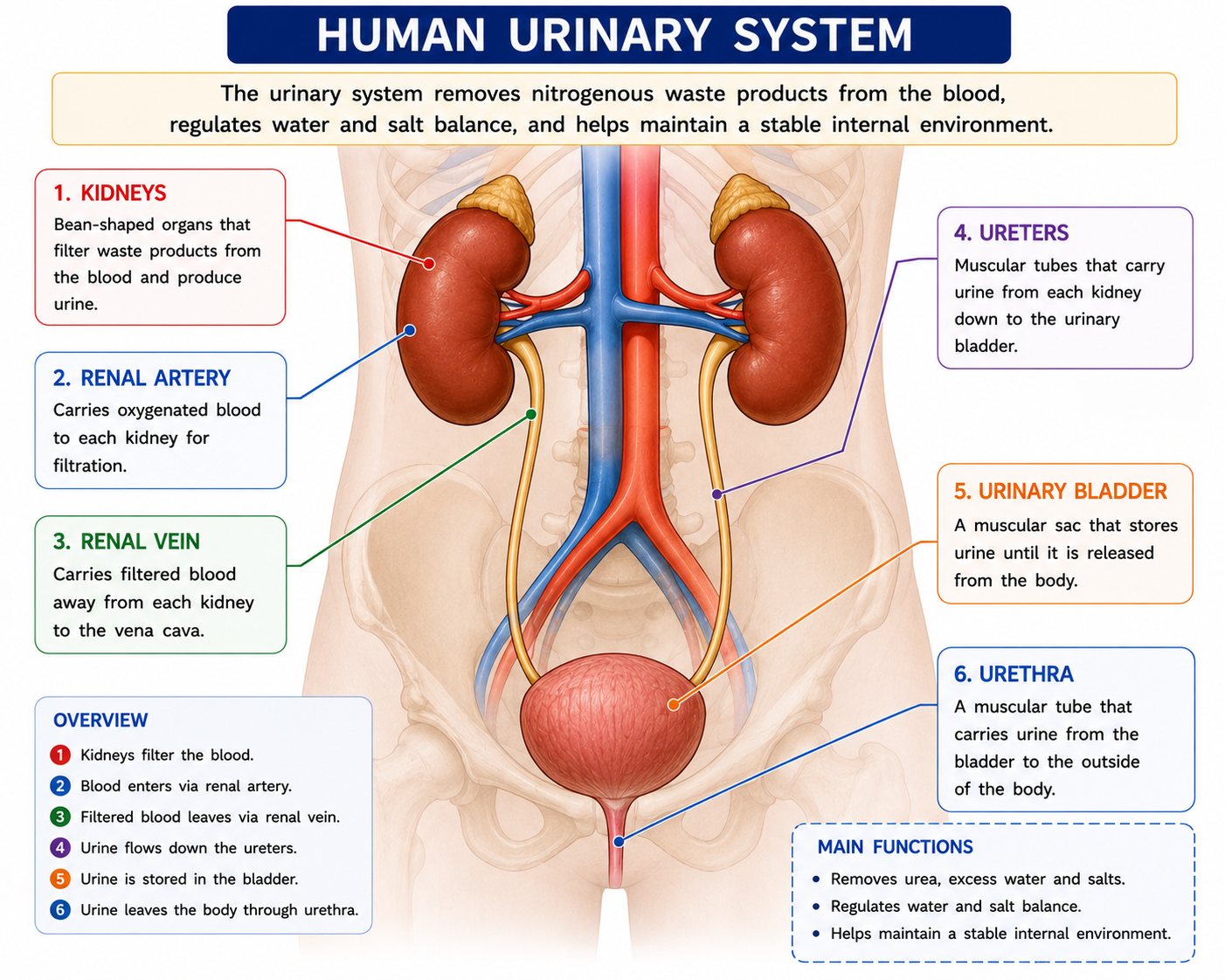
| Structure | Function |
|---|---|
| Kidneys | Filter blood and form urine by removing urea, excess water and excess salts. |
| Renal artery | Carries blood containing wastes to the kidney. |
| Renal vein | Carries filtered blood away from the kidney. |
| Ureters | Carry urine from the kidneys to the bladder. |
| Urinary bladder | Stores urine temporarily. |
| Urethra | Carries urine from the bladder out of the body. |
Kidney Cross Section
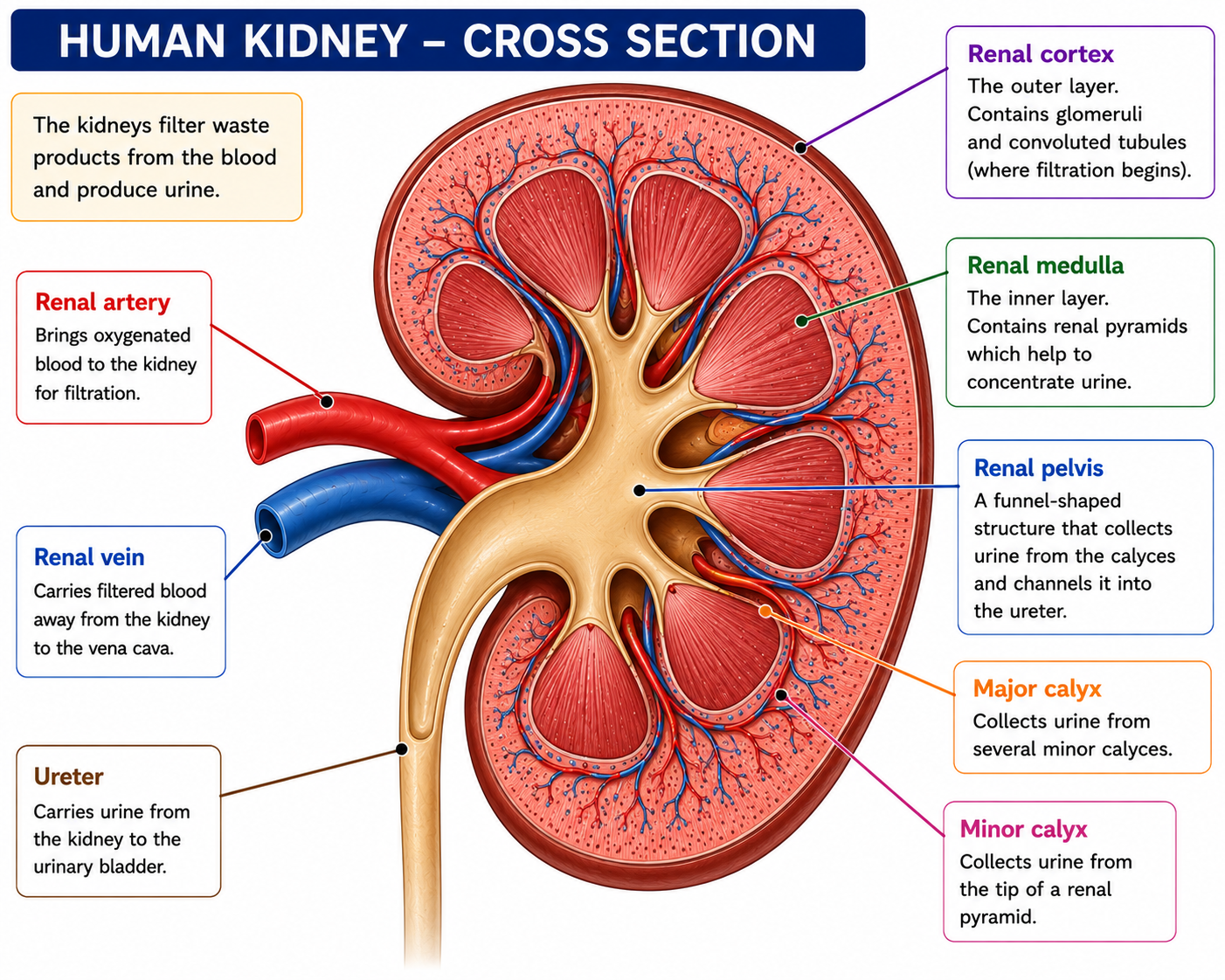
| Part | Function |
|---|---|
| Cortex | Outer region containing glomeruli and convoluted tubules. |
| Medulla | Inner region containing loops of Henle and collecting ducts. |
| Renal pelvis | Collects urine before it enters the ureter. |
| Ureter | Transports urine to the bladder. |
Nephron Structure
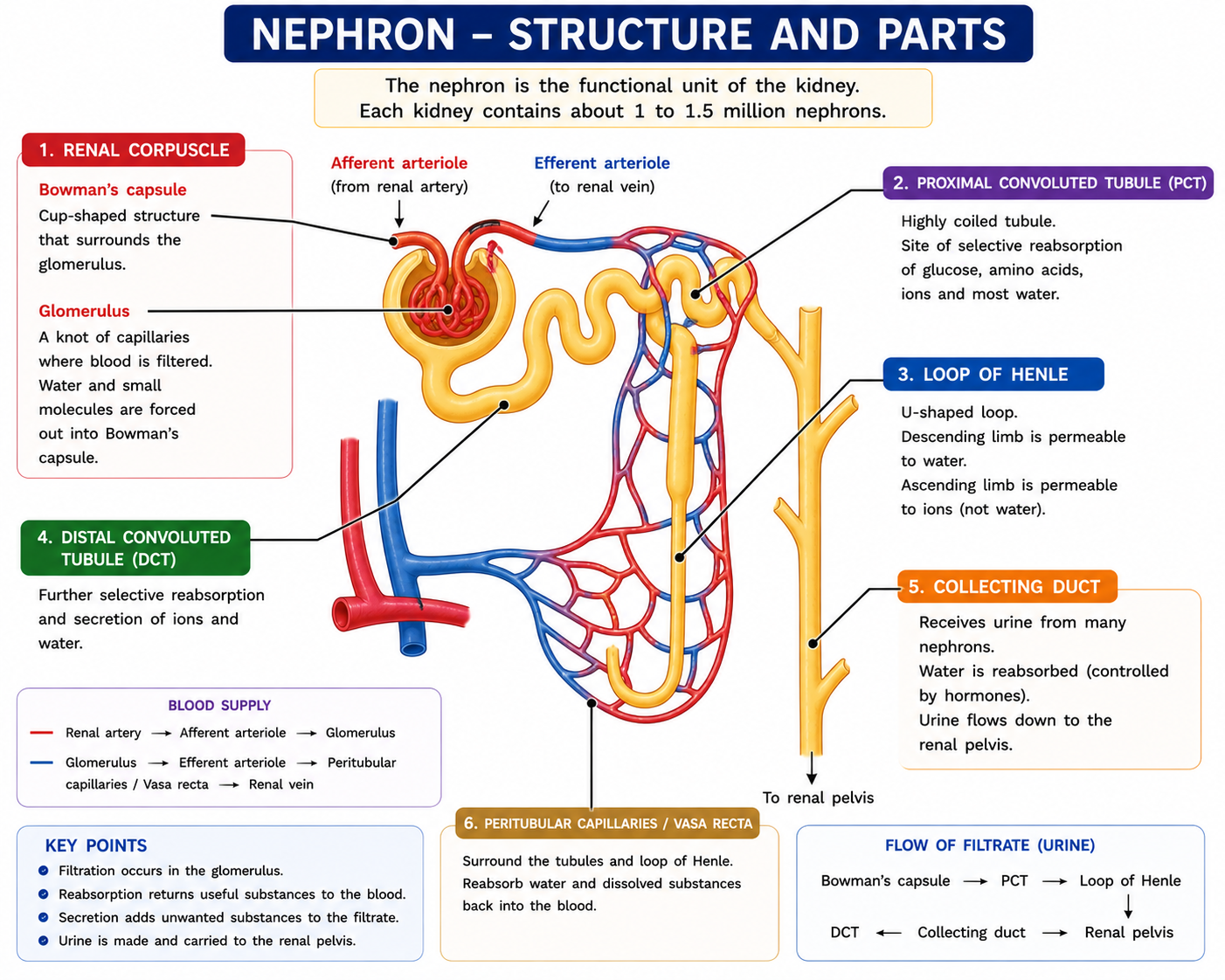
The nephron is the functional unit of the kidney. It filters blood and forms urine.
| Nephron Part | Role |
|---|---|
| Glomerulus | A knot of capillaries where blood is filtered under pressure. |
| Bowman’s capsule | Collects the filtrate from the glomerulus. |
| Proximal convoluted tubule | Main site of selective reabsorption of glucose, amino acids, ions and most water. |
| Loop of Henle | Helps with water and ion balance. |
| Distal convoluted tubule | Further adjustment of ions and water. |
| Collecting duct | Collects urine and carries it towards the renal pelvis. |
Formation of Urine
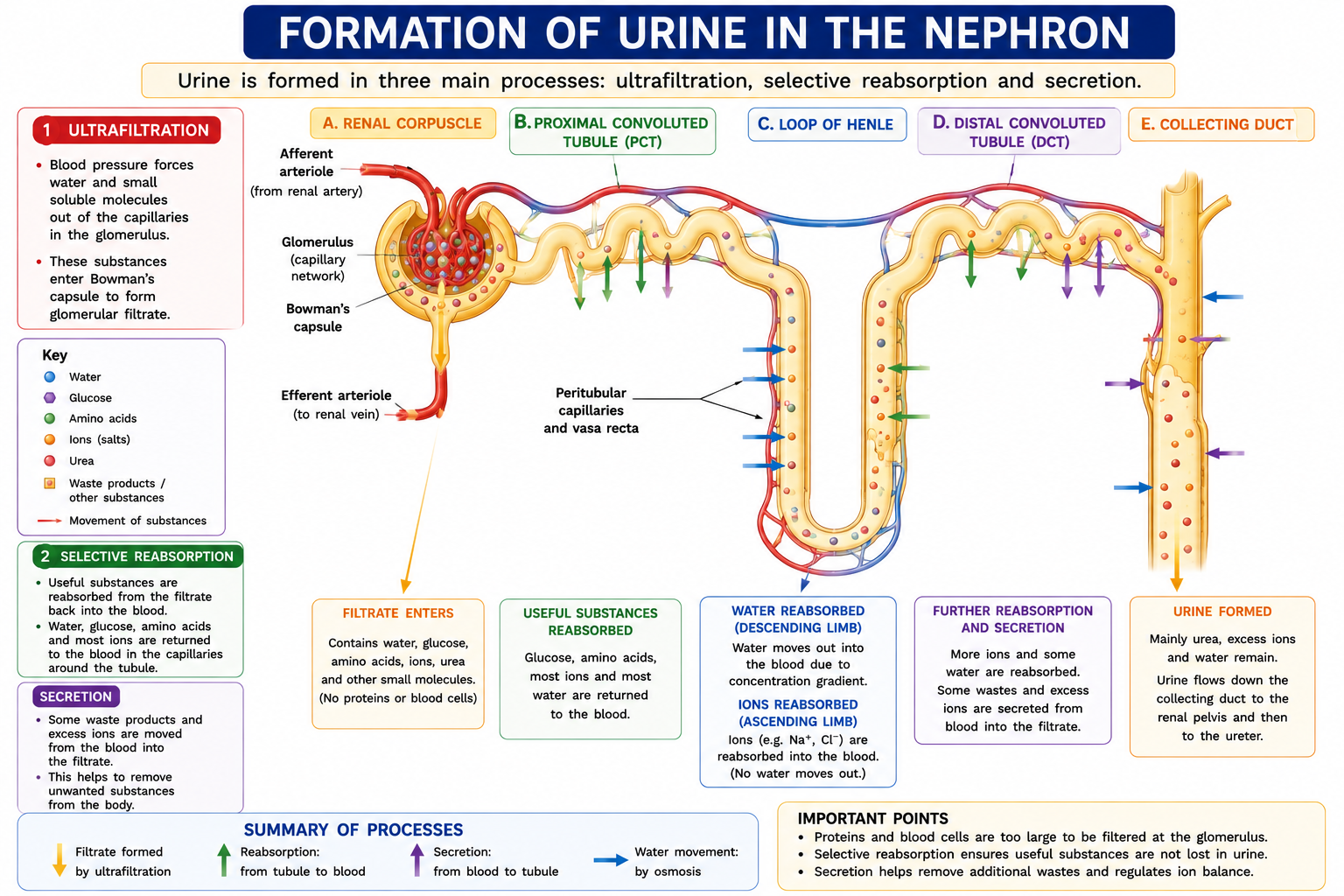
1. Ultrafiltration
Blood enters the glomerulus at high pressure. Small molecules such as water, glucose, amino acids, urea and mineral ions are forced out of the blood into Bowman’s capsule.
2. Selective Reabsorption
Useful substances are reabsorbed from the filtrate back into the blood. This includes all glucose, amino acids, most water and some mineral ions.
3. Urine Formation
Urea, excess water and excess mineral ions remain in the nephron and form urine. Urine flows into the collecting duct, renal pelvis, ureter and bladder.
Dialysis vs Kidney Transplant
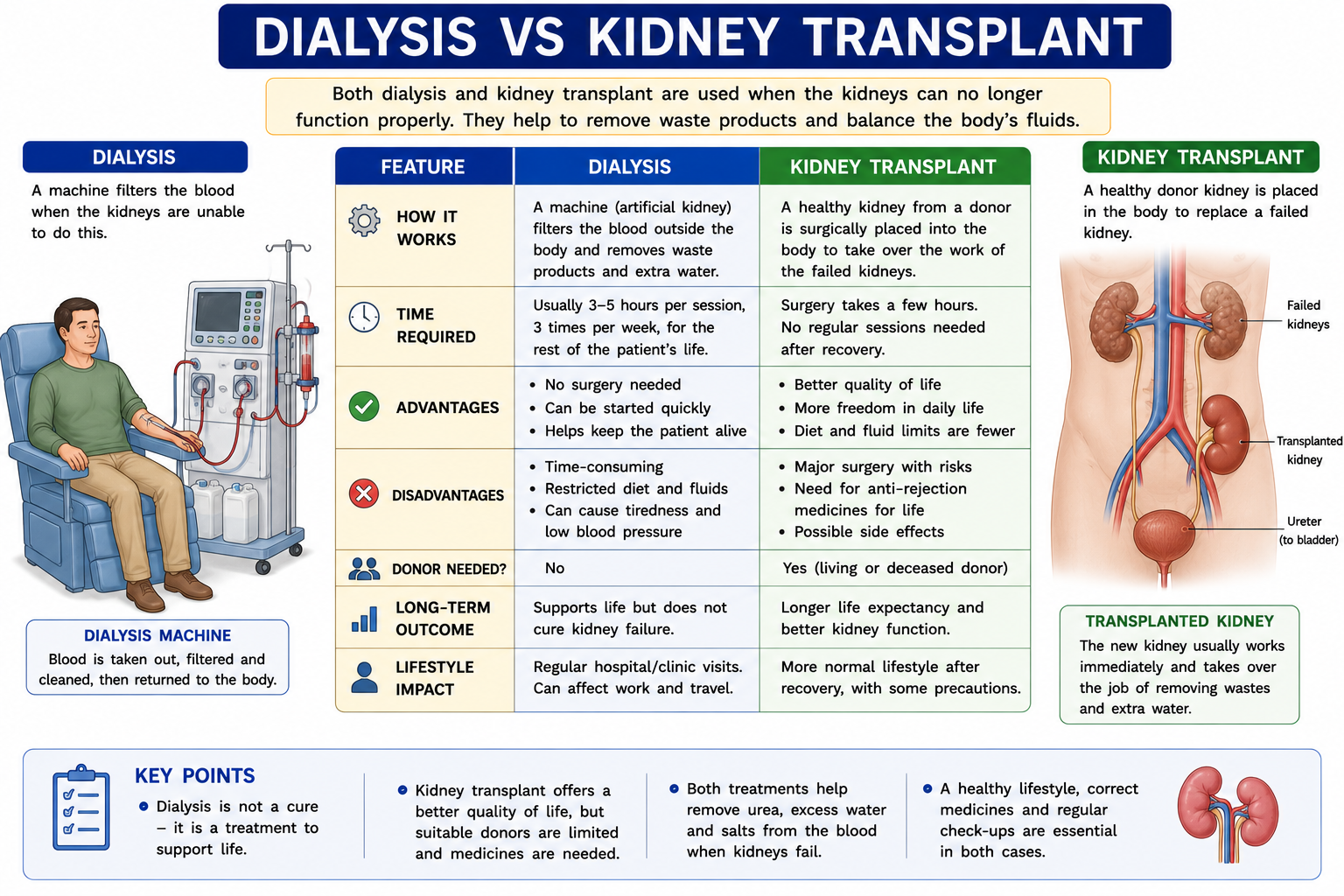
| Feature | Dialysis | Kidney Transplant |
|---|---|---|
| How it works | A machine filters the blood when kidneys cannot work properly. | A healthy donor kidney is placed into the body to replace kidney function. |
| Advantages | No major surgery needed and can keep the patient alive. | Better quality of life and fewer regular hospital visits after recovery. |
| Disadvantages | Time-consuming, repeated sessions, restricted diet and possible tiredness. | Major surgery, risk of rejection and anti-rejection medicines needed. |
| Donor needed? | No | Yes |
| Long-term result | Treatment, not a cure. | Can provide better long-term kidney function if successful. |
Kidney Failure
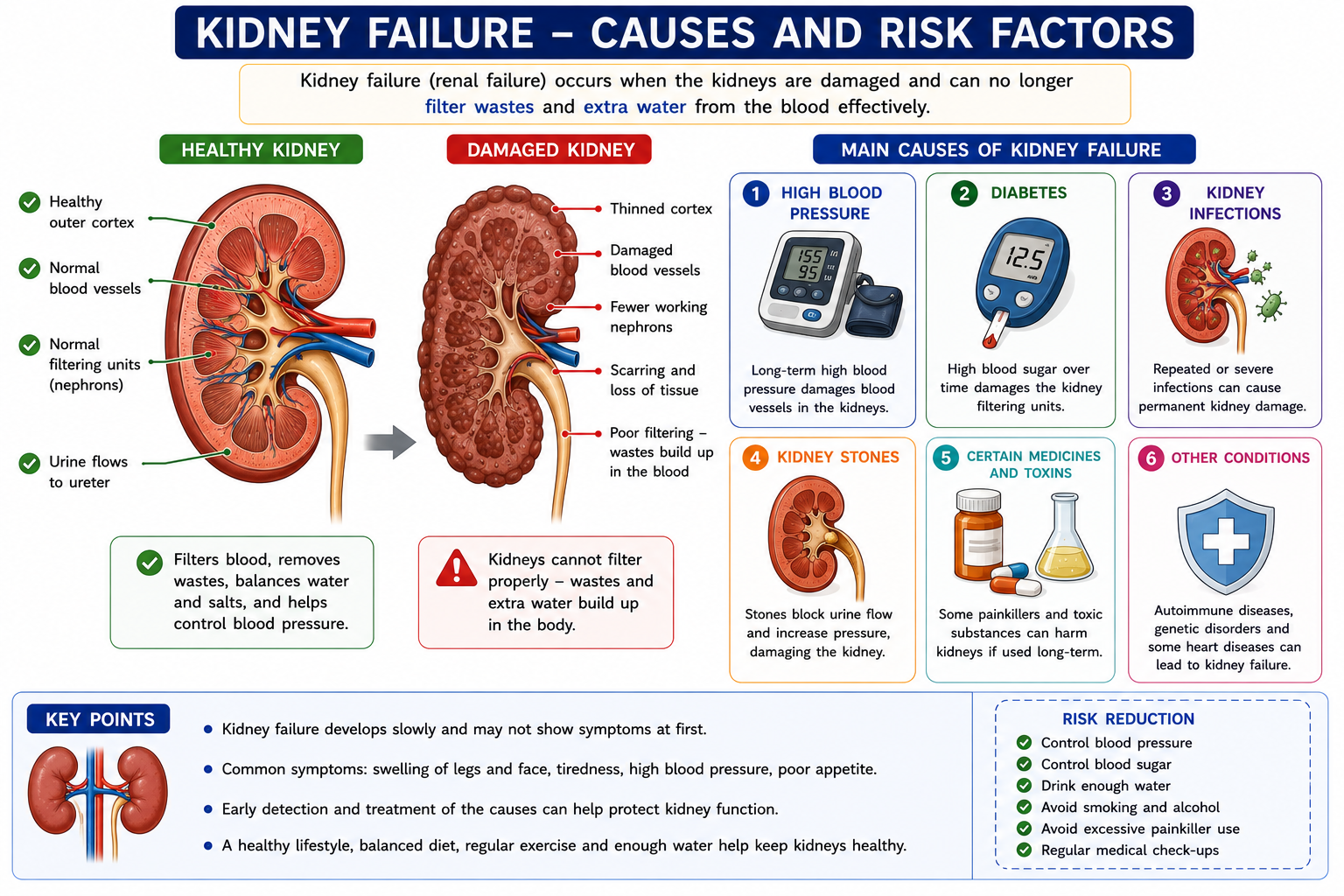
Kidney failure occurs when kidneys can no longer filter blood effectively. Waste products and excess water build up in the body.
| Cause / Risk Factor | How It Can Damage the Kidney |
|---|---|
| High blood pressure | Damages small blood vessels in the kidney. |
| Diabetes | High blood glucose can damage filtering units in the kidney. |
| Kidney infections | Can damage kidney tissues if repeated or severe. |
| Kidney stones | Can block urine flow and increase pressure. |
| Certain medicines or toxins | May damage kidney cells, especially with long-term misuse. |
Exam Definitions
| Term | Definition |
|---|---|
| Excretion | Removal from organisms of toxic materials, waste products of metabolism and substances in excess of requirements. |
| Urea | A nitrogenous waste product made in the liver from excess amino acids. |
| Nephron | The functional unit of the kidney where blood is filtered and urine is formed. |
| Ultrafiltration | Filtration of blood under high pressure in the glomerulus. |
| Selective reabsorption | Reabsorption of useful substances from the filtrate back into the blood. |
| Dialysis | A treatment that uses a machine to remove waste products and excess water from the blood. |
| Kidney transplant | Surgical placement of a healthy donor kidney into a patient with kidney failure. |
Common Exam Mistakes
- Confusing excretion with egestion.
- Saying faeces is an excretory product. Faeces is mainly egested, not excreted.
- Forgetting that urea is made in the liver, not in the kidney.
- Writing that glucose should be present in urine in a healthy person.
- Forgetting that proteins and blood cells are too large to be filtered.
- Mixing up ureter and urethra.
- Saying dialysis cures kidney failure. It supports life but does not cure kidney failure.
Exam Style Questions and Answers
Quick Revision Summary
- Excretion removes metabolic waste and excess substances.
- The kidneys remove urea, excess water and excess mineral ions.
- Urea is made in the liver from excess amino acids.
- The nephron is the functional unit of the kidney.
- Ultrafiltration occurs in the glomerulus.
- Selective reabsorption returns useful substances to the blood.
- Urine contains mainly urea, excess water and excess salts.
- Dialysis filters blood using a machine but does not cure kidney failure.
- A kidney transplant may give better long-term quality of life, but rejection is possible.