
IGCSE Biology: Drugs
Complete Cambridge IGCSE Biology guide covering medicinal drugs, recreational drugs, antibiotics, antibiotic resistance, alcohol, smoking and smoking during pregnancy.
Learning Objectives
Define a drug as a substance that affects body or mind functions.
Compare medicinal drugs and recreational drugs.
Explain how antibiotics treat bacterial infections.
Describe how antibiotic resistance develops.
Describe the effects of alcohol and tobacco smoking.
Explain how smoking during pregnancy affects the baby.
What is a Drug?
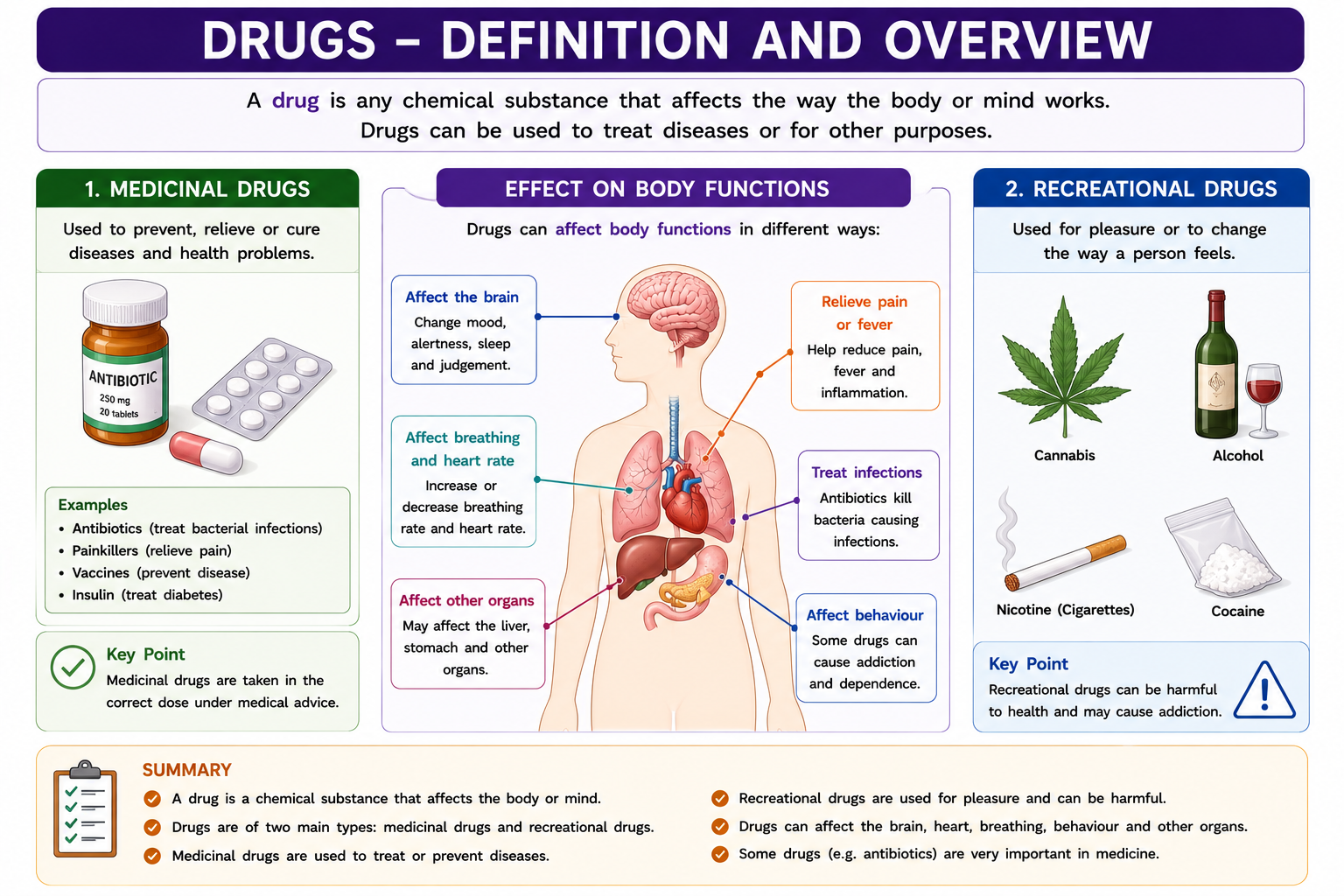
A drug is any chemical substance that affects the way the body or mind works.
Drugs can be helpful when used correctly for medical treatment, but misuse can be harmful.
Types of Drugs
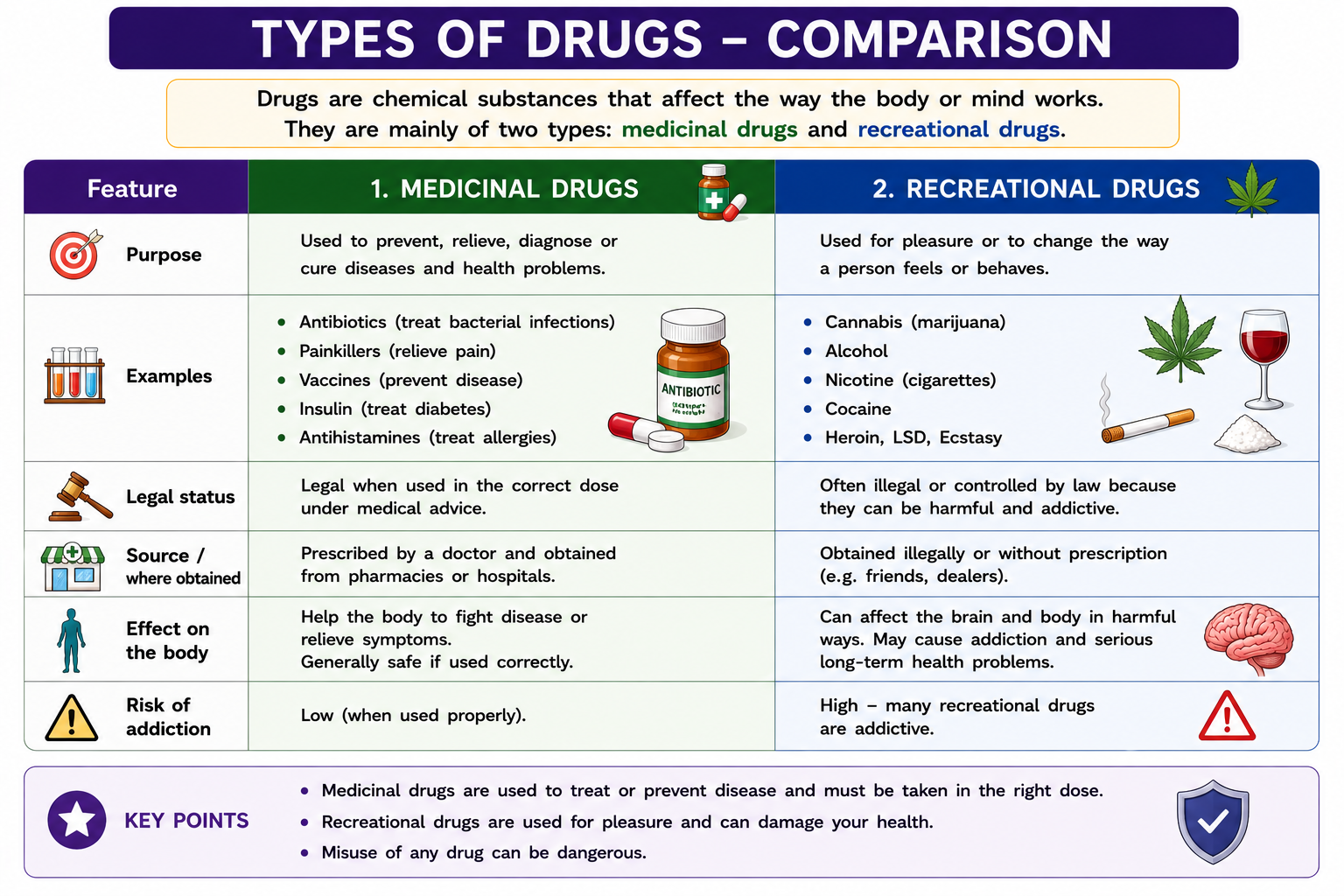
| Feature | Medicinal Drugs | Recreational Drugs |
|---|---|---|
| Purpose | Used to prevent, relieve or cure diseases. | Used for pleasure or to change mood, behaviour or perception. |
| Examples | Antibiotics, painkillers, vaccines, insulin. | Alcohol, nicotine and other harmful substances. |
| Risk | Usually low when used correctly. | Can be harmful and may cause addiction. |
Antibiotics
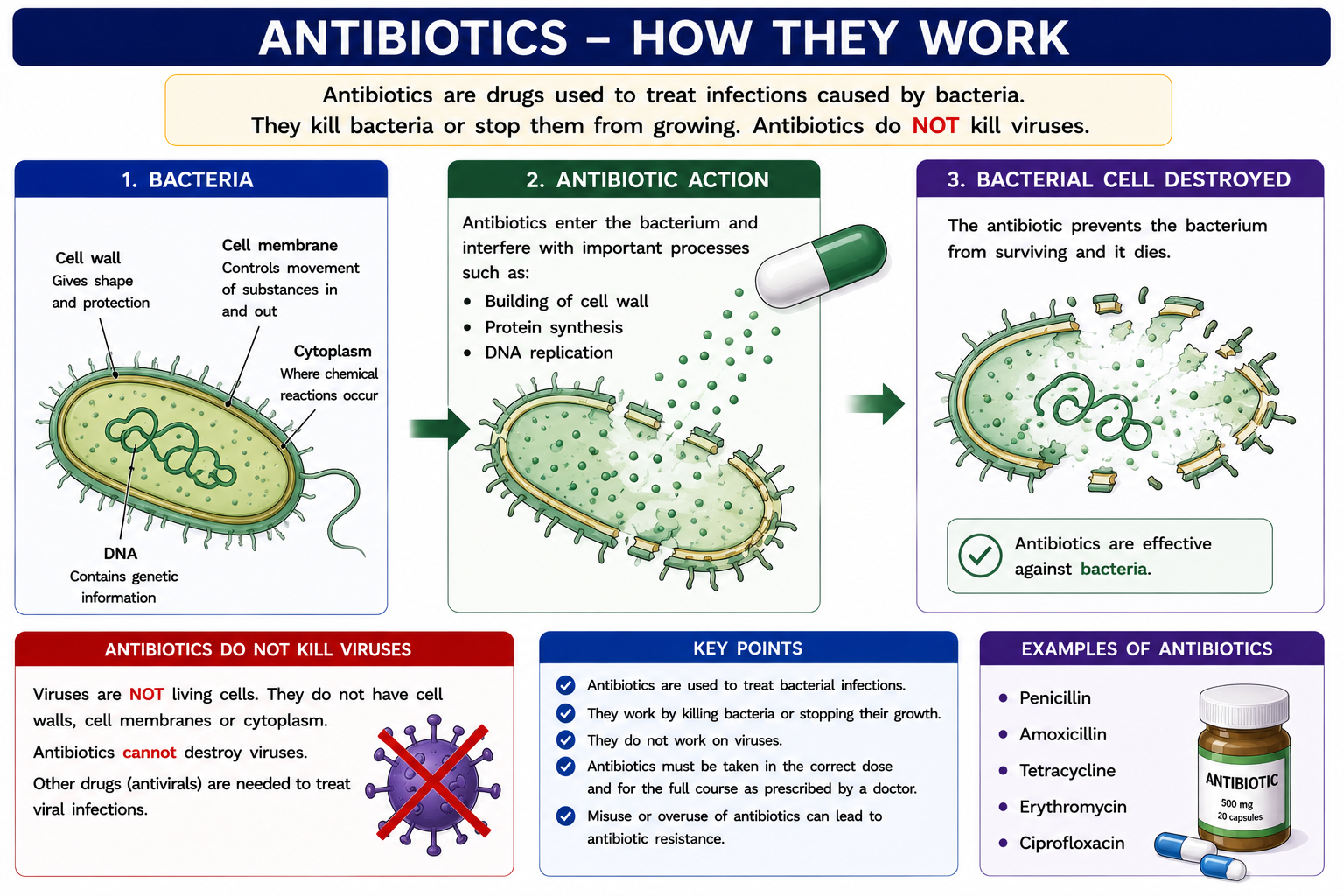
Antibiotics are drugs used to treat bacterial infections. They kill bacteria or stop them from growing.
Antibiotics do not kill viruses because viruses do not have normal cell structures such as cell walls, cell membranes or cytoplasm.
Antibiotic Resistance
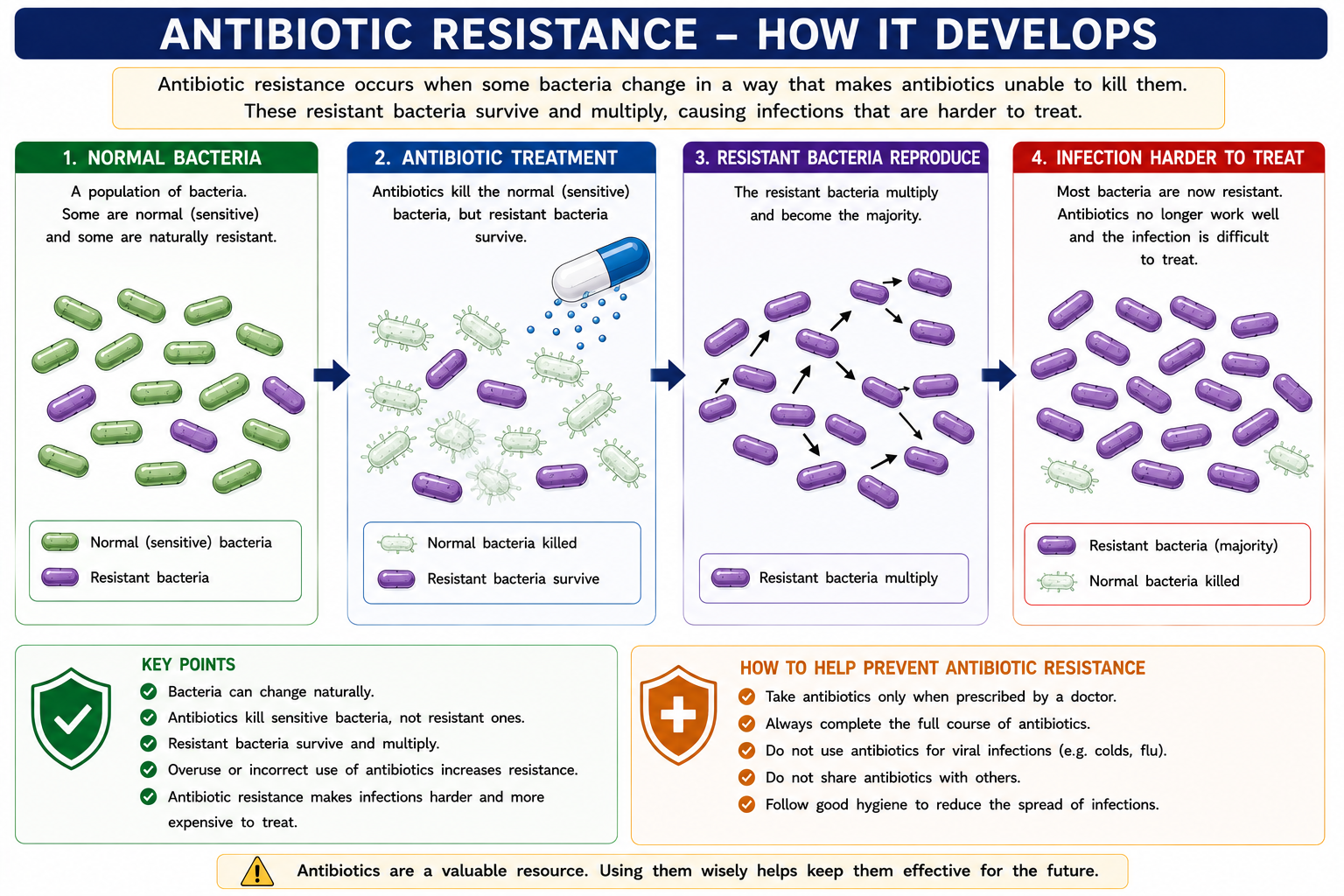
Antibiotic resistance occurs when some bacteria survive antibiotic treatment and reproduce, making infections harder to treat.
- Some bacteria are naturally resistant.
- Antibiotics kill sensitive bacteria.
- Resistant bacteria survive.
- Resistant bacteria reproduce and become more common.
Effects of Alcohol
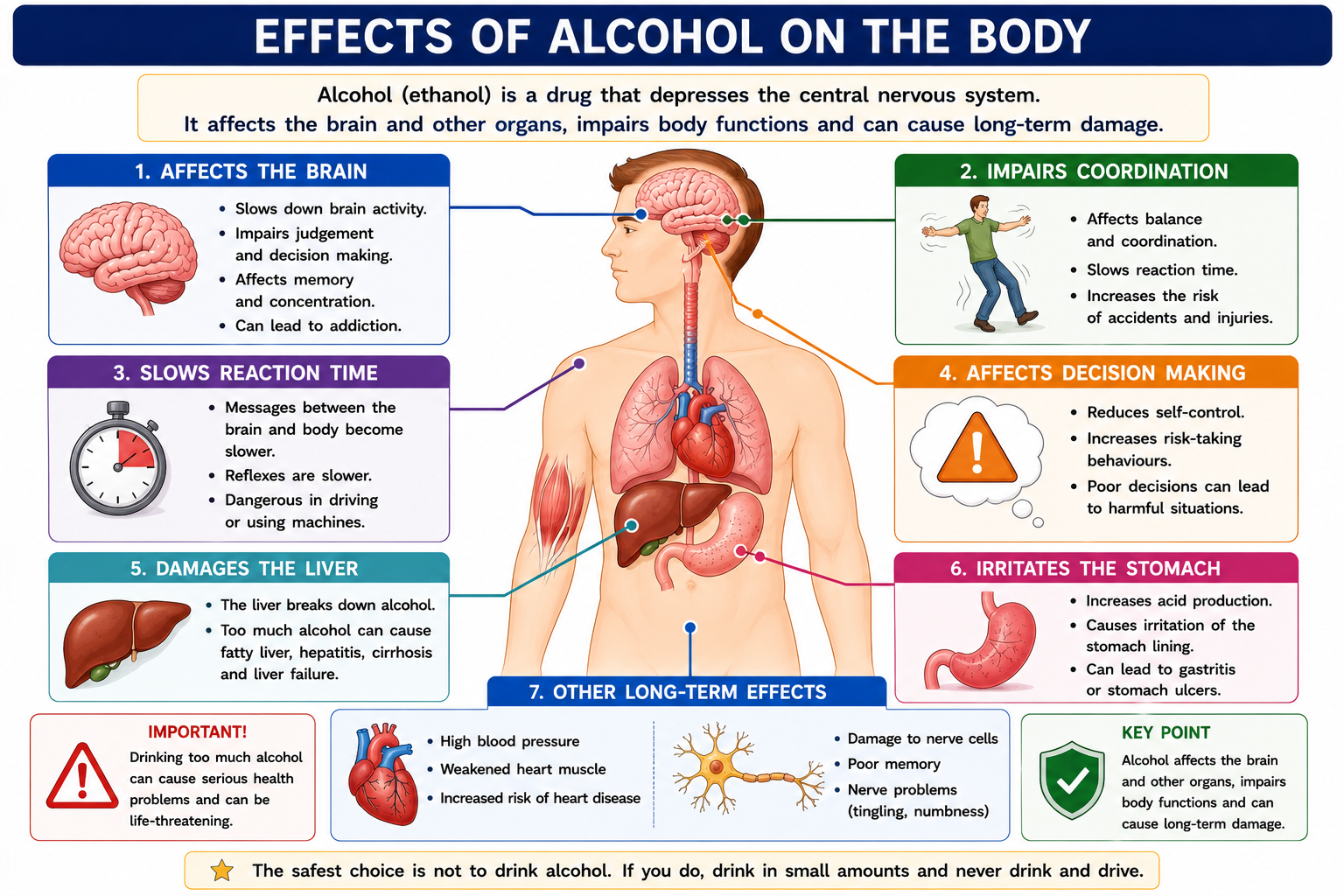
| Effect | Explanation |
|---|---|
| Slower reaction time | Messages between the brain and body become slower. |
| Poor coordination | Balance and movement control are reduced. |
| Poor judgement | Decision making becomes less reliable. |
| Liver damage | Long-term alcohol use can damage liver cells. |
| Addiction | Alcohol can lead to dependence. |
Effects of Smoking on the Body
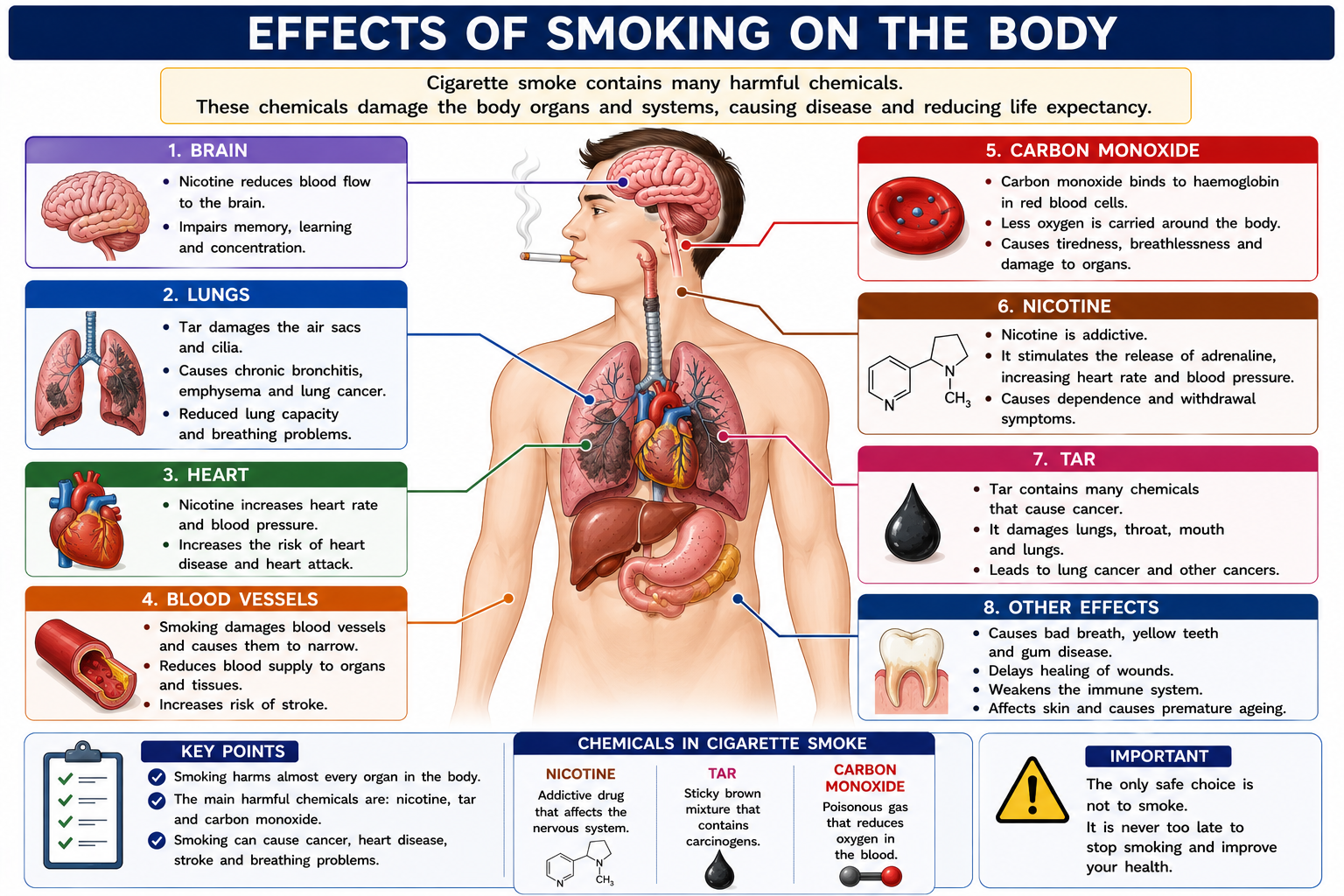
| Substance | Effect |
|---|---|
| Nicotine | Addictive drug that increases heart rate and blood pressure. |
| Tar | Damages lungs and cilia and contains carcinogens. |
| Carbon monoxide | Binds to haemoglobin, reducing oxygen transport in the blood. |
Smoking During Pregnancy
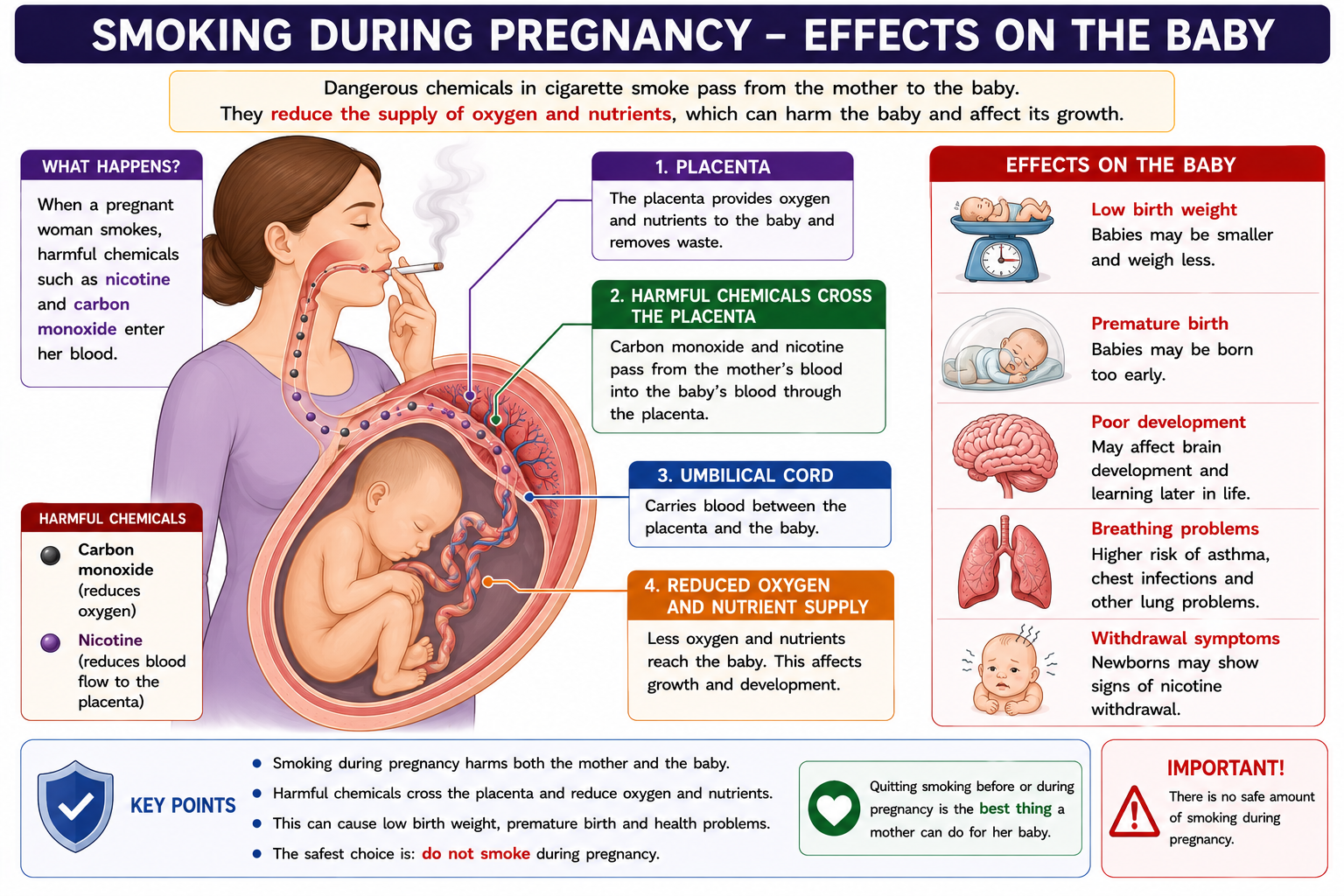
Harmful substances in cigarette smoke can cross the placenta and affect the developing baby.
- Carbon monoxide reduces the amount of oxygen carried in the mother’s blood.
- Nicotine can reduce blood flow to the placenta.
- The baby may receive less oxygen and fewer nutrients.
- This can lead to low birth weight, premature birth and health problems.
Exam Definitions
| Term | Definition |
|---|---|
| Drug | A chemical substance that affects the way the body or mind works. |
| Medicinal drug | A drug used to treat, prevent or relieve disease or symptoms. |
| Recreational drug | A drug taken for pleasure or to change mood or behaviour. |
| Antibiotic | A drug used to treat bacterial infections. |
| Antibiotic resistance | When bacteria survive antibiotic treatment and reproduce, making the antibiotic less effective. |
| Addiction | A condition where a person becomes dependent on a drug. |
| Carcinogen | A substance that can cause cancer. |
Common Exam Mistakes
- Saying antibiotics kill viruses. They do not.
- Forgetting that antibiotics treat bacterial infections only.
- Writing that the body becomes resistant to antibiotics. It is bacteria that become resistant.
- Confusing nicotine, tar and carbon monoxide.
- Forgetting that carbon monoxide reduces oxygen transport by binding to haemoglobin.
- Saying smoking during pregnancy only affects the mother; it can also affect the baby.
Exam Style Questions and Answers
1. Define a drug.
A drug is a chemical substance that affects the way the body or mind works.
2. Give one example of a medicinal drug.
Antibiotics, painkillers, vaccines or insulin.
3. Why do antibiotics not work against viruses?
Viruses do not have structures such as cell walls or cytoplasm that antibiotics target.
4. Explain how antibiotic resistance develops.
Some resistant bacteria survive antibiotic treatment, reproduce and pass on resistance, so the population becomes harder to kill.
5. State two effects of alcohol on the body.
Alcohol slows reaction time and impairs coordination. It can also damage the liver and affect judgement.
6. State the effect of carbon monoxide in cigarette smoke.
Carbon monoxide binds to haemoglobin, reducing the amount of oxygen carried by the blood.
7. How can smoking during pregnancy affect the baby?
It can reduce oxygen and nutrient supply to the baby, causing low birth weight, premature birth and health problems.
Quick Revision Summary
- Drugs affect body or mind functions.
- Medicinal drugs are used to treat, prevent or relieve disease.
- Recreational drugs are used for pleasure and can be harmful.
- Antibiotics treat bacterial infections, not viral infections.
- Antibiotic resistance happens when resistant bacteria survive and reproduce.
- Alcohol slows reaction time, reduces coordination and can damage the liver.
- Nicotine is addictive.
- Tar damages lungs and contains carcinogens.
- Carbon monoxide reduces oxygen transport in blood.
- Smoking during pregnancy can harm the developing baby.