
IGCSE Biology: Human Nutrition
Complete Cambridge IGCSE Biology guide covering balanced diet, digestion, digestive enzymes, absorption, villi, and common exam questions.
Learning Objectives
The Human Digestive System
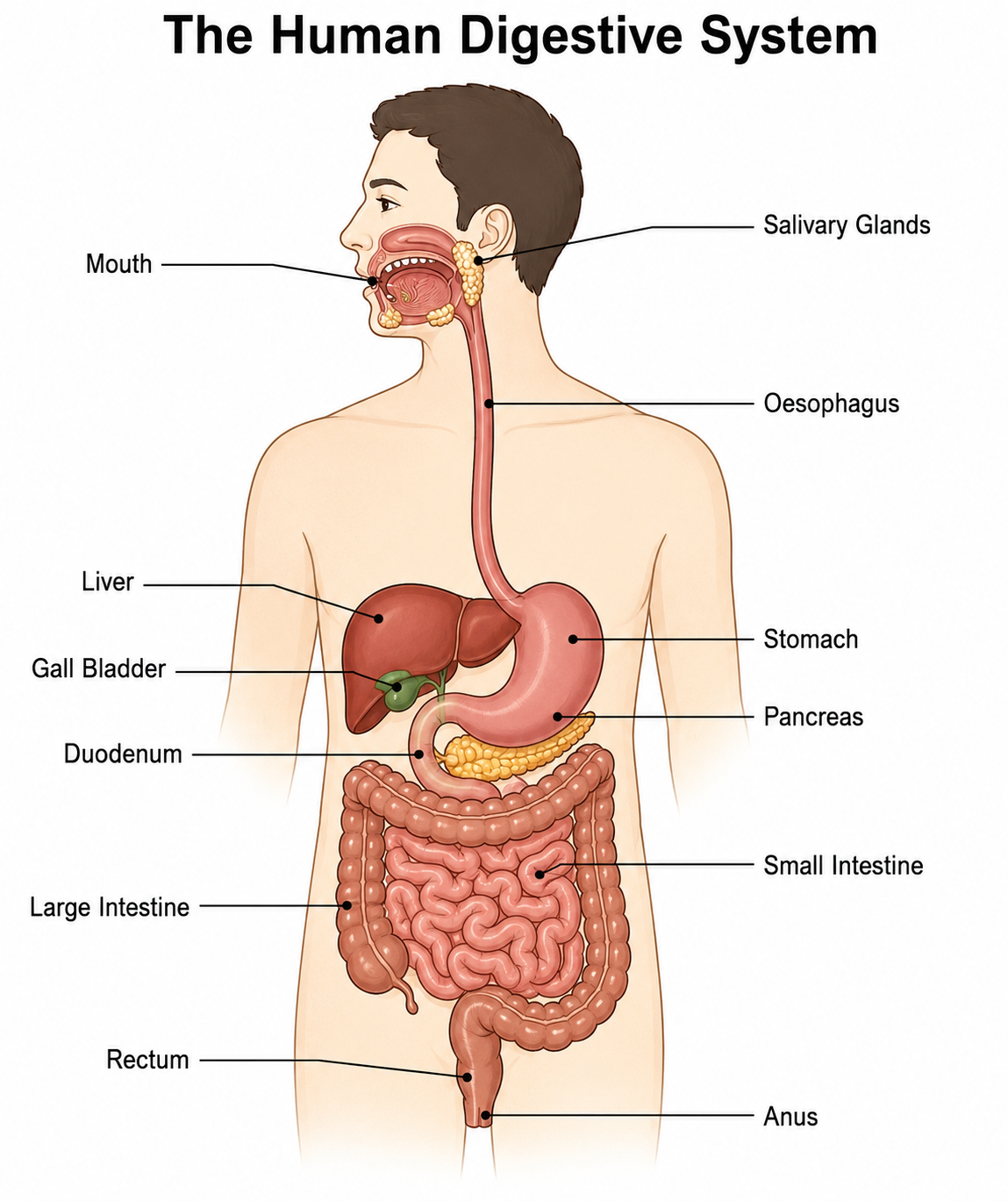
The digestive system breaks down large, insoluble food molecules into small, soluble molecules that can be absorbed into the blood and used by the body.
| Organ | Main Function |
|---|---|
| Mouth | Food is chewed and mixed with saliva. Amylase begins starch digestion. |
| Oesophagus | Moves food to the stomach by peristalsis. |
| Stomach | Churns food and begins protein digestion using protease. |
| Liver | Produces bile. |
| Gall bladder | Stores bile. |
| Pancreas | Produces digestive enzymes. |
| Small intestine | Completes digestion and absorbs nutrients. |
| Large intestine | Absorbs water from undigested food. |
| Rectum | Stores faeces before egestion. |
| Anus | Allows faeces to leave the body. |
Balanced Diet
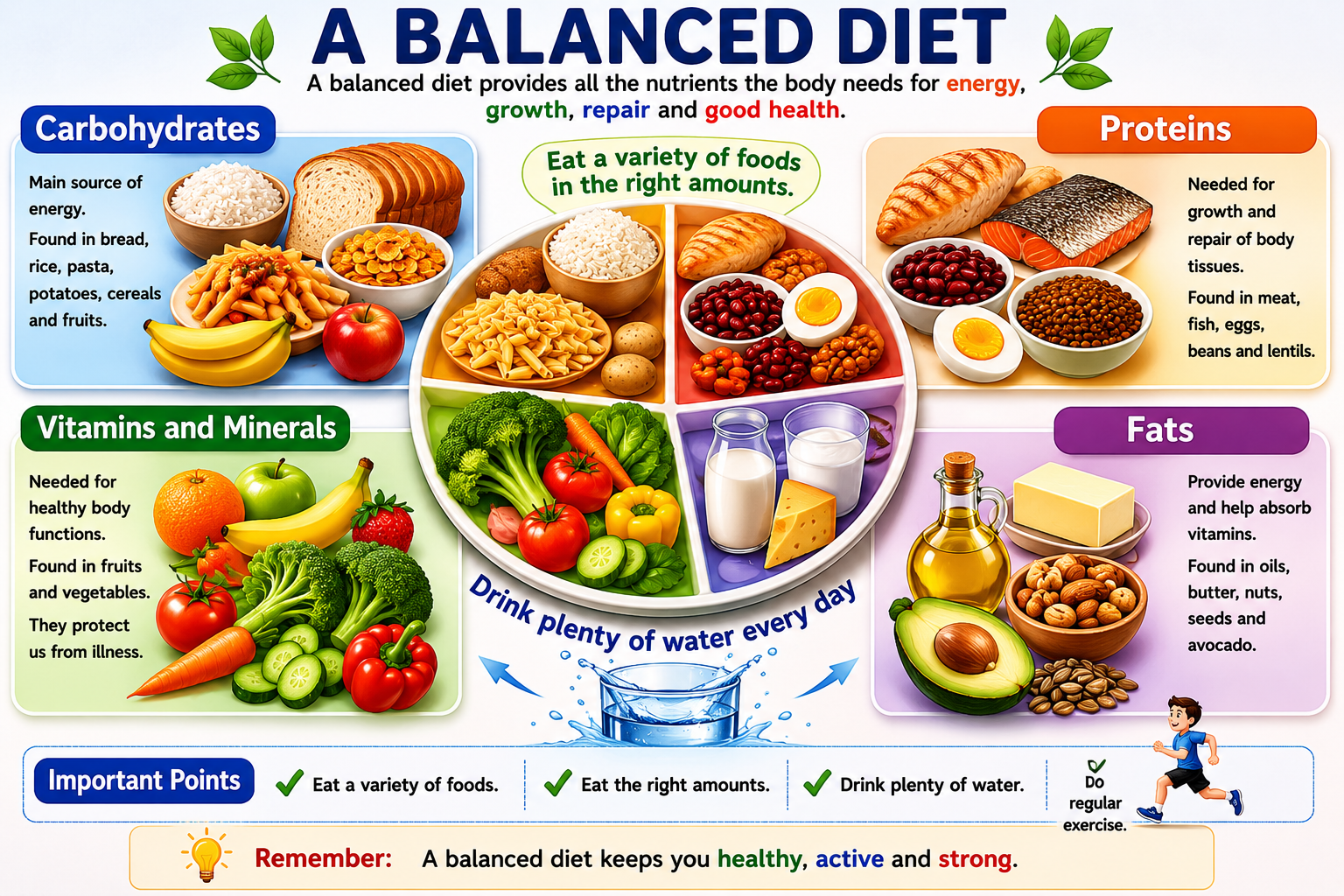
| Nutrient | Function | Sources |
|---|---|---|
| Carbohydrates | Main source of energy. | Bread, rice, pasta, potatoes, cereals. |
| Proteins | Growth and repair of tissues. | Meat, fish, eggs, beans, lentils, milk. |
| Fats | Energy storage, insulation and protection of organs. | Oils, butter, nuts, seeds, avocado. |
| Vitamins | Keep body processes working properly. | Fruit and vegetables. |
| Minerals | Needed in small amounts for healthy body functions. | Dairy, vegetables, whole grains. |
| Fibre | Helps food move through the gut and prevents constipation. | Whole grains, fruit, vegetables. |
| Water | Solvent, transport medium and temperature regulation. | Drinking water, fruit, soups. |
Mechanical and Chemical Digestion
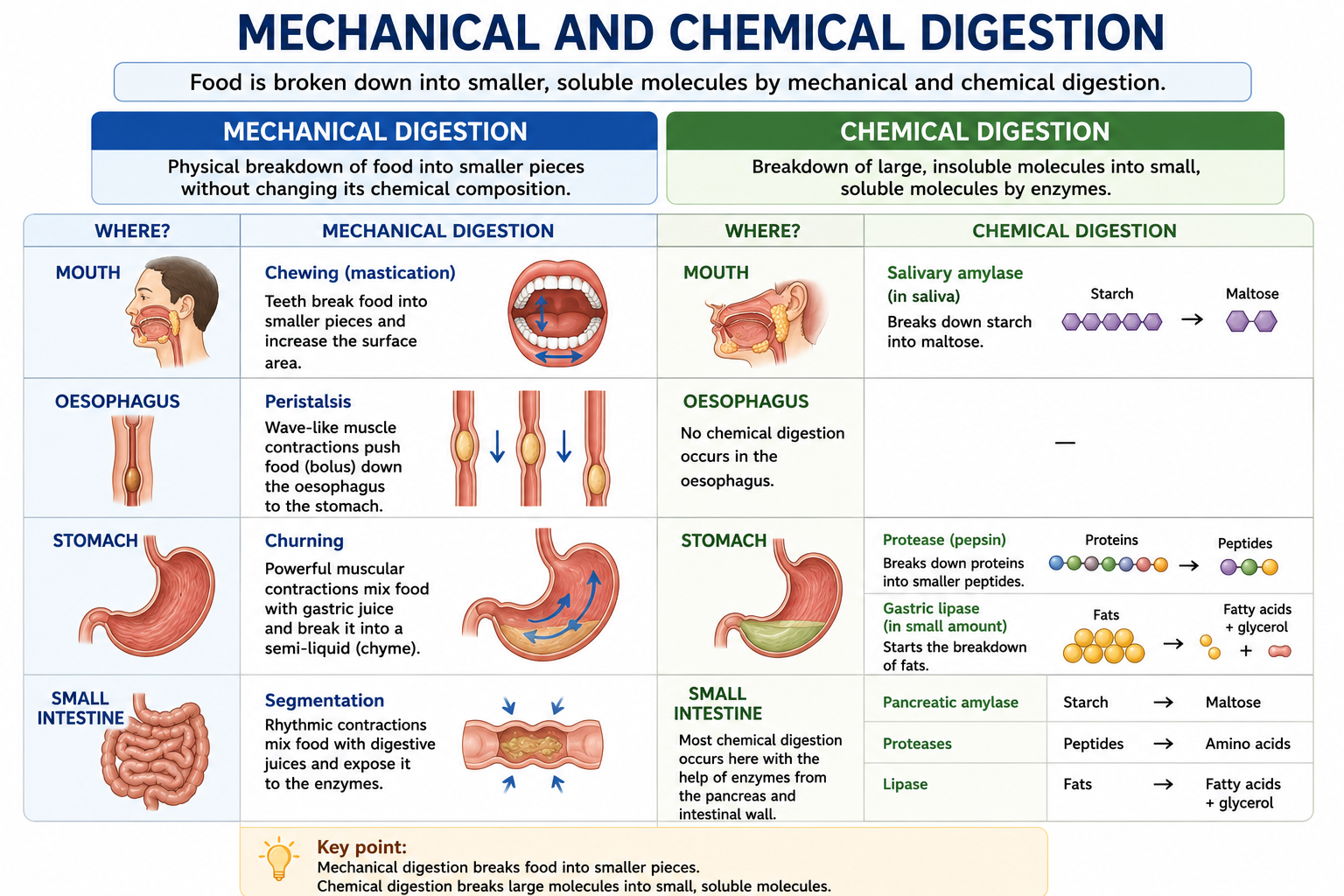
Mechanical Digestion
Physical breakdown of food into smaller pieces without changing the chemical structure.
Examples: chewing, stomach churning, segmentation.
Chemical Digestion
Breakdown of large insoluble molecules into small soluble molecules by enzymes.
Examples: starch to maltose, proteins to amino acids, fats to fatty acids and glycerol.
Digestive Enzymes Summary
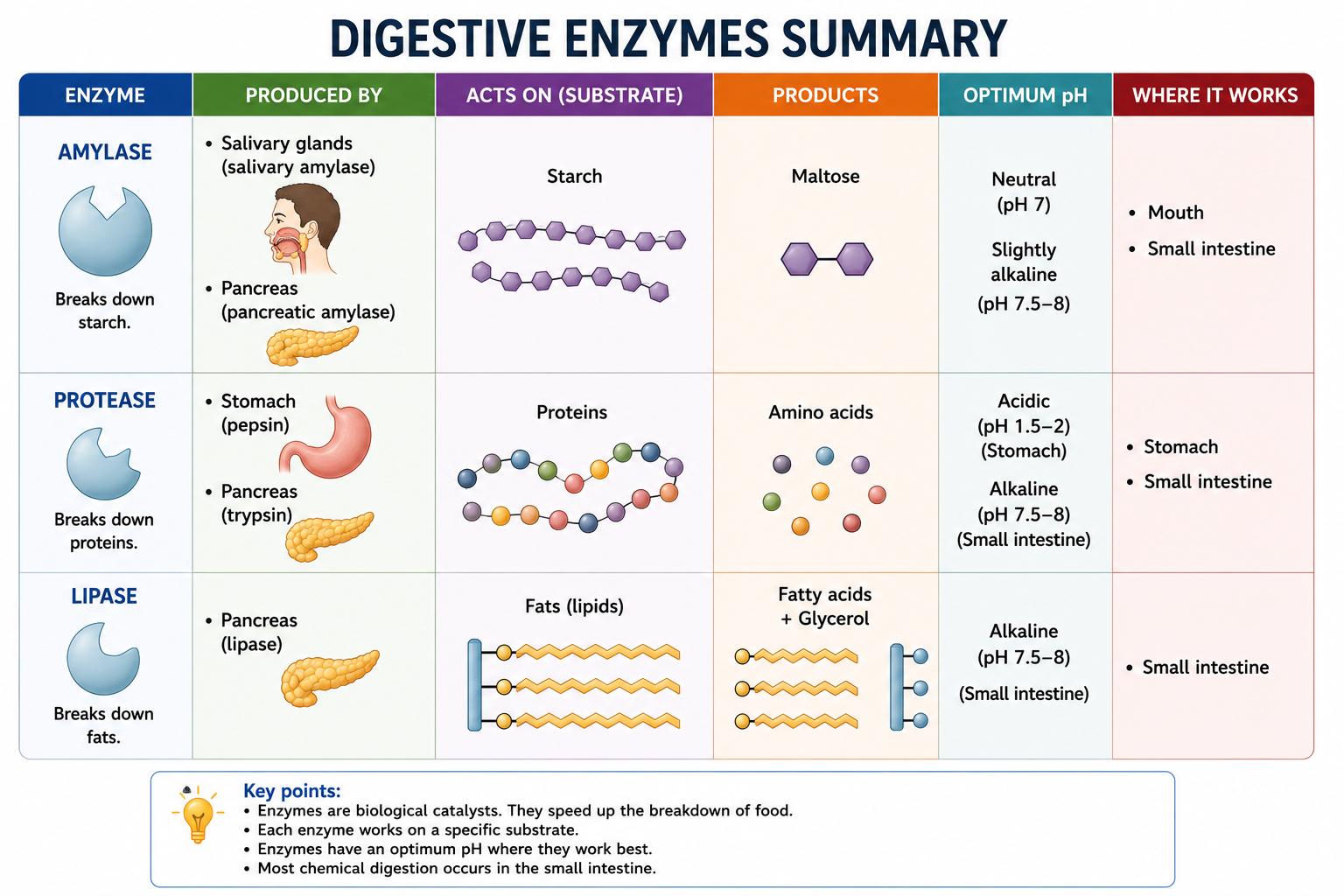
| Enzyme | Substrate | Products | Where It Acts |
|---|---|---|---|
| Amylase | Starch | Maltose | Mouth and small intestine |
| Protease | Proteins | Amino acids | Stomach and small intestine |
| Lipase | Fats / lipids | Fatty acids and glycerol | Small intestine |
Bile
Bile is produced by the liver and stored in the gall bladder. It is released into the small intestine.
| Function of Bile | Explanation |
|---|---|
| Neutralises stomach acid | Creates alkaline conditions for enzymes in the small intestine. |
| Emulsifies fats | Breaks large fat droplets into smaller droplets, increasing surface area for lipase. |
Absorption in the Small Intestine
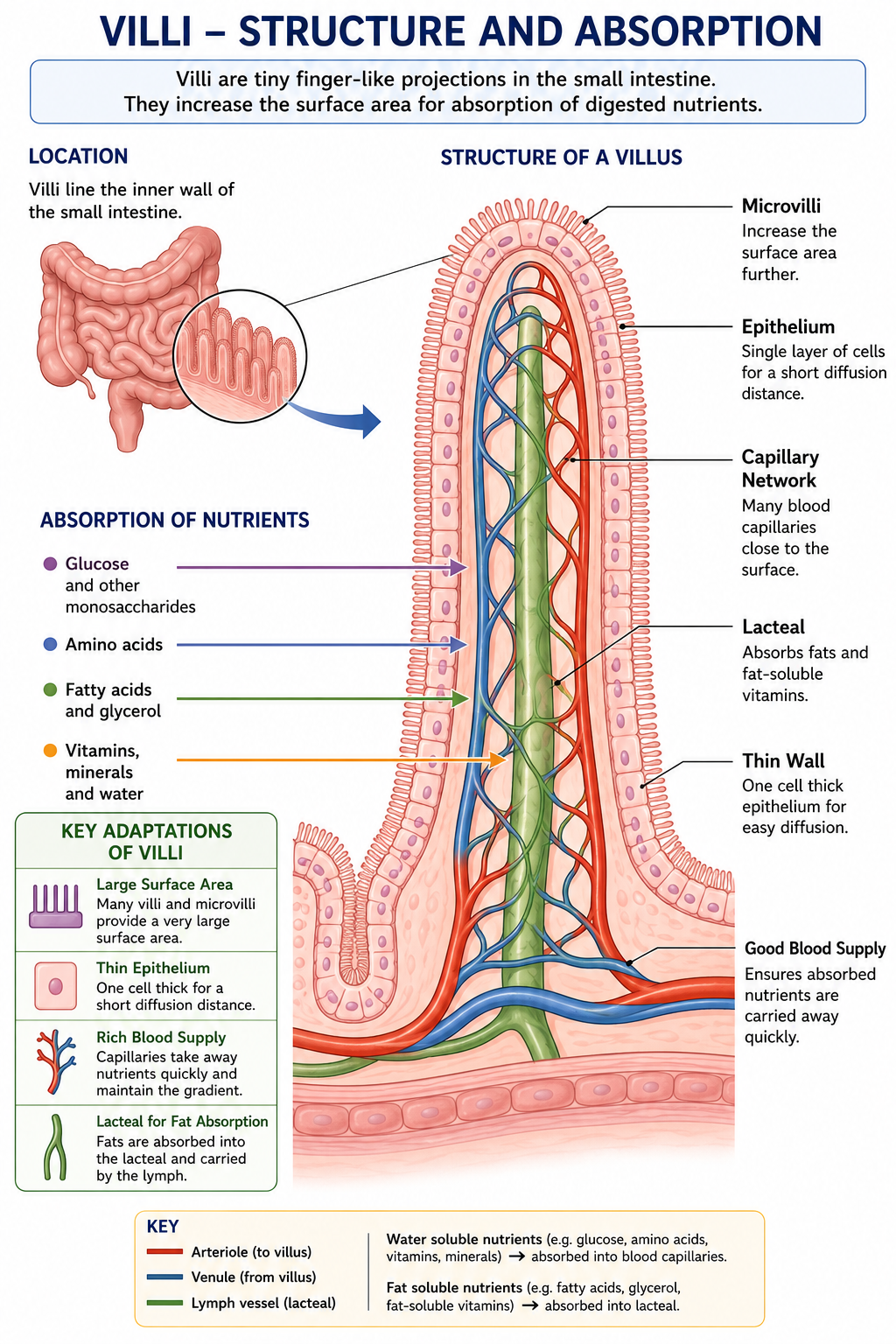
Digested food molecules are absorbed through the wall of the small intestine into the blood or lymph.
| Adaptation of Villi | How It Helps Absorption |
|---|---|
| Many villi and microvilli | Provide a very large surface area. |
| Thin epithelium | Short diffusion distance. |
| Rich blood supply | Maintains a steep concentration gradient. |
| Lacteal | Absorbs fatty acids and glycerol. |
Exam Definitions
| Term | Definition |
|---|---|
| Ingestion | Taking food into the body through the mouth. |
| Digestion | Breaking down large insoluble food molecules into small soluble molecules. |
| Absorption | Movement of small soluble molecules through the wall of the small intestine into the blood. |
| Assimilation | Using absorbed food molecules in body cells. |
| Egestion | Removal of undigested food as faeces through the anus. |
| Peristalsis | Wave-like muscle contractions that move food along the alimentary canal. |
| Balanced diet | A diet that provides all nutrients in the correct amounts for healthy body function. |
Common Exam Mistakes
- Writing that bile digests fat chemically. Bile emulsifies fat; lipase digests fat.
- Forgetting fibre as part of a balanced diet.
- Confusing absorption with assimilation.
- Saying the large intestine absorbs digested nutrients. Most nutrient absorption occurs in the small intestine.
- Forgetting that amylase breaks starch into maltose, not glucose directly.
- Writing “food pipe” instead of oesophagus in exam answers.
- Not linking villi adaptations to faster diffusion or larger surface area.
Exam Style Questions and Answers
Quick Revision Summary
- A balanced diet contains carbohydrates, proteins, fats, vitamins, minerals, fibre and water.
- Digestion changes large insoluble molecules into small soluble molecules.
- Mechanical digestion physically breaks food into smaller pieces.
- Chemical digestion uses enzymes.
- Amylase digests starch into maltose.
- Protease digests proteins into amino acids.
- Lipase digests fats into fatty acids and glycerol.
- Bile emulsifies fats and neutralises stomach acid.
- Most absorption occurs in the small intestine.
- Villi increase surface area for absorption.