
IGCSE Biology: Respiration
Complete Cambridge IGCSE Biology guide covering aerobic respiration, anaerobic respiration, oxygen debt, respiration in yeast, energy uses, exam definitions and exam-style questions.
Learning Objectives
Define respiration as a chemical process that releases energy from glucose.
State the word equation and balanced chemical equation for aerobic respiration.
Compare aerobic and anaerobic respiration.
Describe anaerobic respiration in muscles and yeast.
Explain oxygen debt after intense exercise.
Describe uses of energy released by respiration.
What is Respiration?
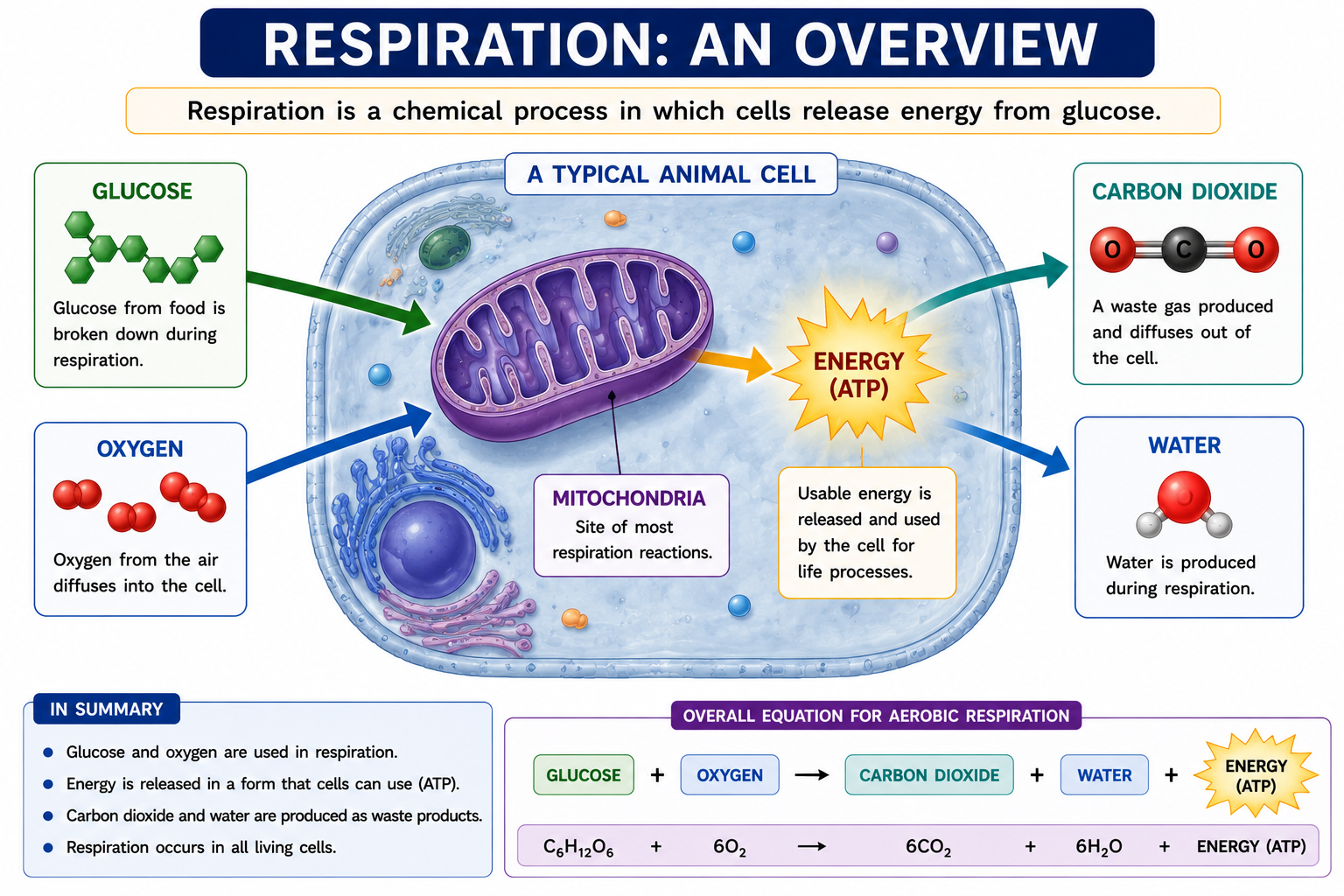
Respiration is the chemical process in cells that breaks down nutrient molecules, such as glucose, to release energy.
Respiration is not the same as breathing. Breathing moves air in and out of the lungs, while respiration happens inside cells.
Aerobic Respiration
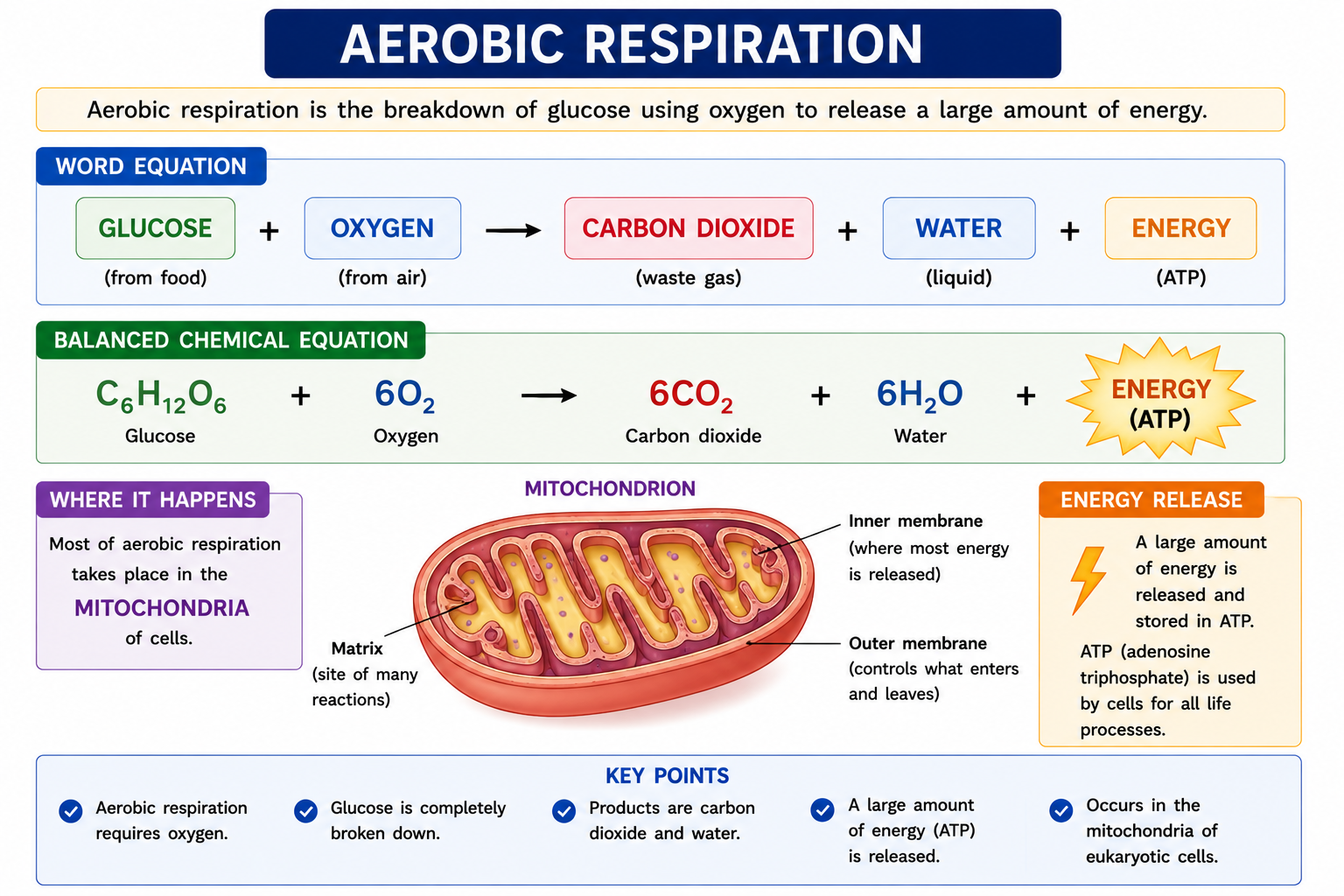
Aerobic respiration is the breakdown of glucose using oxygen to release a large amount of energy.
| Type | Equation |
|---|---|
| Word equation | glucose + oxygen → carbon dioxide + water + energy |
| Balanced chemical equation | C6H12O6 + 6O2 → 6CO2 + 6H2O + energy |
Most aerobic respiration occurs in the mitochondria of cells.
Anaerobic Respiration
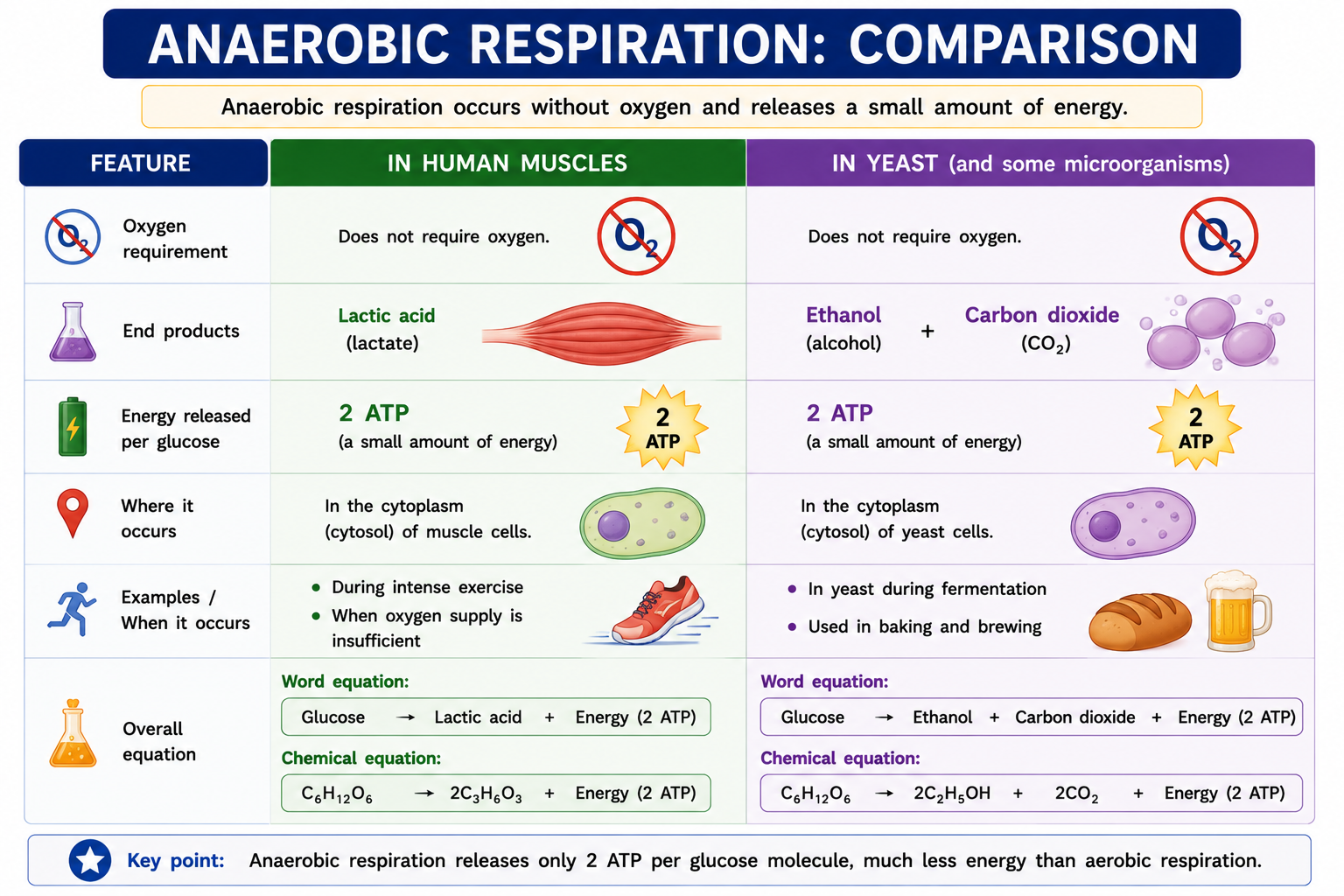
Anaerobic respiration releases energy from glucose without oxygen. It releases less energy than aerobic respiration.
| Organism / Cell | Word Equation | Products |
|---|---|---|
| Human muscle cells | glucose → lactic acid + energy | Lactic acid and a small amount of energy |
| Yeast | glucose → ethanol + carbon dioxide + energy | Ethanol, carbon dioxide and a small amount of energy |
Aerobic vs Anaerobic Respiration
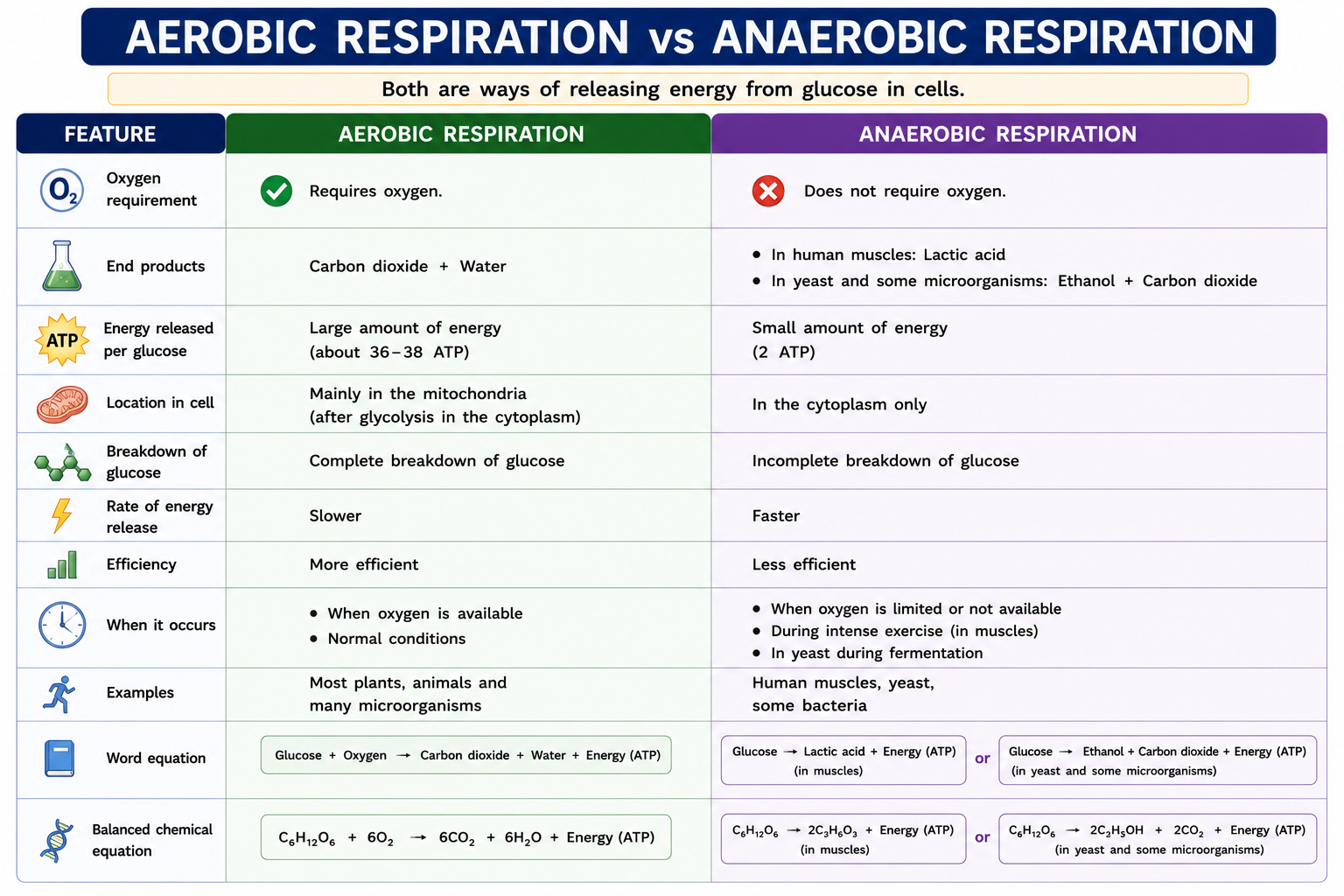
| Feature | Aerobic Respiration | Anaerobic Respiration |
|---|---|---|
| Oxygen | Requires oxygen | Does not require oxygen |
| Breakdown of glucose | Complete breakdown | Incomplete breakdown |
| Energy released | Large amount | Small amount |
| Products in animals | Carbon dioxide and water | Lactic acid |
| Products in yeast | Carbon dioxide and water | Ethanol and carbon dioxide |
| Location | Mainly mitochondria | Cytoplasm |
Oxygen Debt

During intense exercise, muscles may not receive enough oxygen for aerobic respiration. They respire anaerobically and produce lactic acid.
After exercise, extra oxygen is needed to break down or remove lactic acid. This extra oxygen needed is called oxygen debt.
- Muscles need more energy during intense exercise.
- Oxygen supply becomes insufficient.
- Anaerobic respiration occurs in muscle cells.
- Lactic acid builds up and causes fatigue.
- After exercise, breathing rate stays high to take in extra oxygen.
- Lactic acid is transported in the blood to the liver, where it is broken down.
Uses of Energy from Respiration
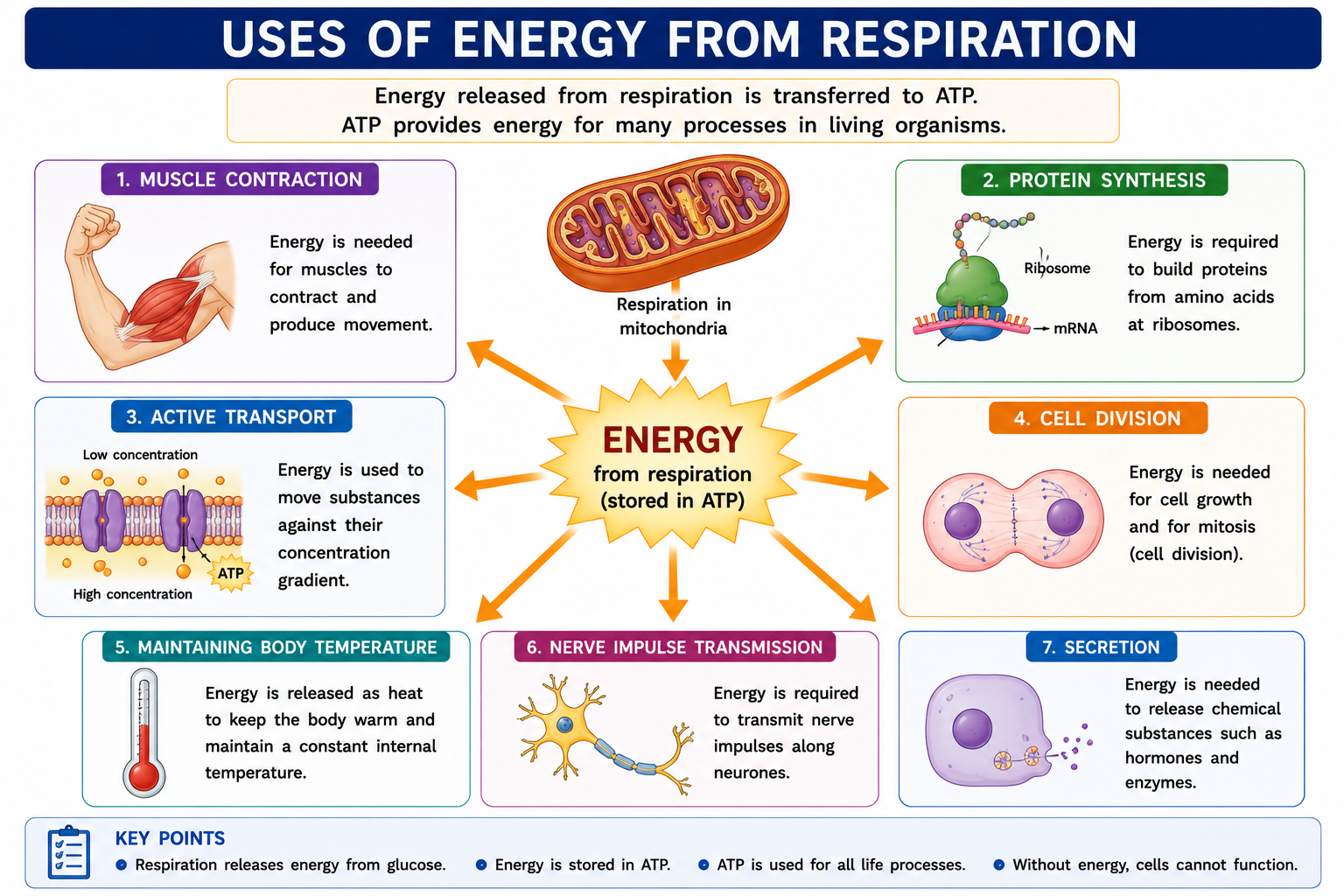
| Use of Energy | Example |
|---|---|
| Muscle contraction | Movement, exercise and heartbeat. |
| Protein synthesis | Building proteins from amino acids. |
| Active transport | Moving substances against a concentration gradient. |
| Cell division | Growth and repair of tissues. |
| Maintaining body temperature | Keeping a constant internal temperature in mammals. |
| Nerve impulse transmission | Sending electrical signals along neurones. |
| Secretion | Releasing substances such as enzymes and hormones. |
Respiration in Yeast
Yeast respires anaerobically during fermentation. This produces ethanol and carbon dioxide.
| Product | Use |
|---|---|
| Carbon dioxide | Makes bread dough rise. |
| Ethanol | Used in alcoholic drinks. |
In IGCSE Biology, remember that anaerobic respiration in yeast is also called fermentation.
Exam Definitions
| Term | Definition |
|---|---|
| Respiration | The chemical reactions in cells that break down nutrient molecules and release energy. |
| Aerobic respiration | The breakdown of glucose using oxygen to release energy. |
| Anaerobic respiration | The breakdown of glucose without oxygen to release a small amount of energy. |
| Oxygen debt | The extra oxygen needed after exercise to remove lactic acid. |
| Fermentation | Anaerobic respiration in yeast producing ethanol and carbon dioxide. |
| Lactic acid | The product of anaerobic respiration in human muscle cells. |
Common Exam Mistakes
- Confusing respiration with breathing.
- Forgetting that aerobic respiration releases more energy than anaerobic respiration.
- Writing that anaerobic respiration in muscles produces ethanol. In muscles it produces lactic acid.
- Writing that yeast produces lactic acid. Yeast produces ethanol and carbon dioxide.
- Forgetting oxygen in the aerobic respiration equation.
- Writing that anaerobic respiration produces no energy. It produces a small amount of energy.
- Saying oxygen debt is oxygen used during exercise only. It is the extra oxygen needed after exercise.
Exam Style Questions and Answers
1. Define respiration.
Respiration is the chemical process in cells that breaks down nutrient molecules and releases energy.
2. State the word equation for aerobic respiration.
Glucose + oxygen → carbon dioxide + water + energy.
3. Where does most aerobic respiration occur in a cell?
Most aerobic respiration occurs in the mitochondria.
4. Compare aerobic and anaerobic respiration.
Aerobic respiration uses oxygen and releases a large amount of energy. Anaerobic respiration does not use oxygen and releases a small amount of energy.
5. What is produced by anaerobic respiration in human muscles?
Lactic acid and a small amount of energy.
6. What is produced by anaerobic respiration in yeast?
Ethanol, carbon dioxide and a small amount of energy.
7. Explain oxygen debt.
Oxygen debt is the extra oxygen needed after exercise to break down or remove lactic acid produced during anaerobic respiration.
8. Give three uses of energy released by respiration.
Muscle contraction, protein synthesis and active transport. Other correct answers include cell division, nerve impulses, secretion and maintaining body temperature.
Quick Revision Summary
- Respiration releases energy from glucose inside cells.
- Aerobic respiration uses oxygen.
- Aerobic respiration produces carbon dioxide, water and a large amount of energy.
- Most aerobic respiration occurs in mitochondria.
- Anaerobic respiration does not use oxygen.
- Anaerobic respiration releases a small amount of energy.
- Muscles produce lactic acid during anaerobic respiration.
- Yeast produces ethanol and carbon dioxide during fermentation.
- Oxygen debt is the extra oxygen needed after exercise to remove lactic acid.
- Energy from respiration is used for movement, active transport, growth and other life processes.