
IGCSE Biology: Transport in Animals
Complete Cambridge IGCSE Biology guide covering circulation, heart structure, blood vessels, blood components, double circulation and coronary heart disease.
Learning Objectives
Describe the need for a transport system in animals.
Explain double circulation in humans.
Identify the main structures of the heart.
Compare arteries, veins and capillaries.
Describe the components of blood.
Explain coronary heart disease and its risk factors.
Human Circulatory System
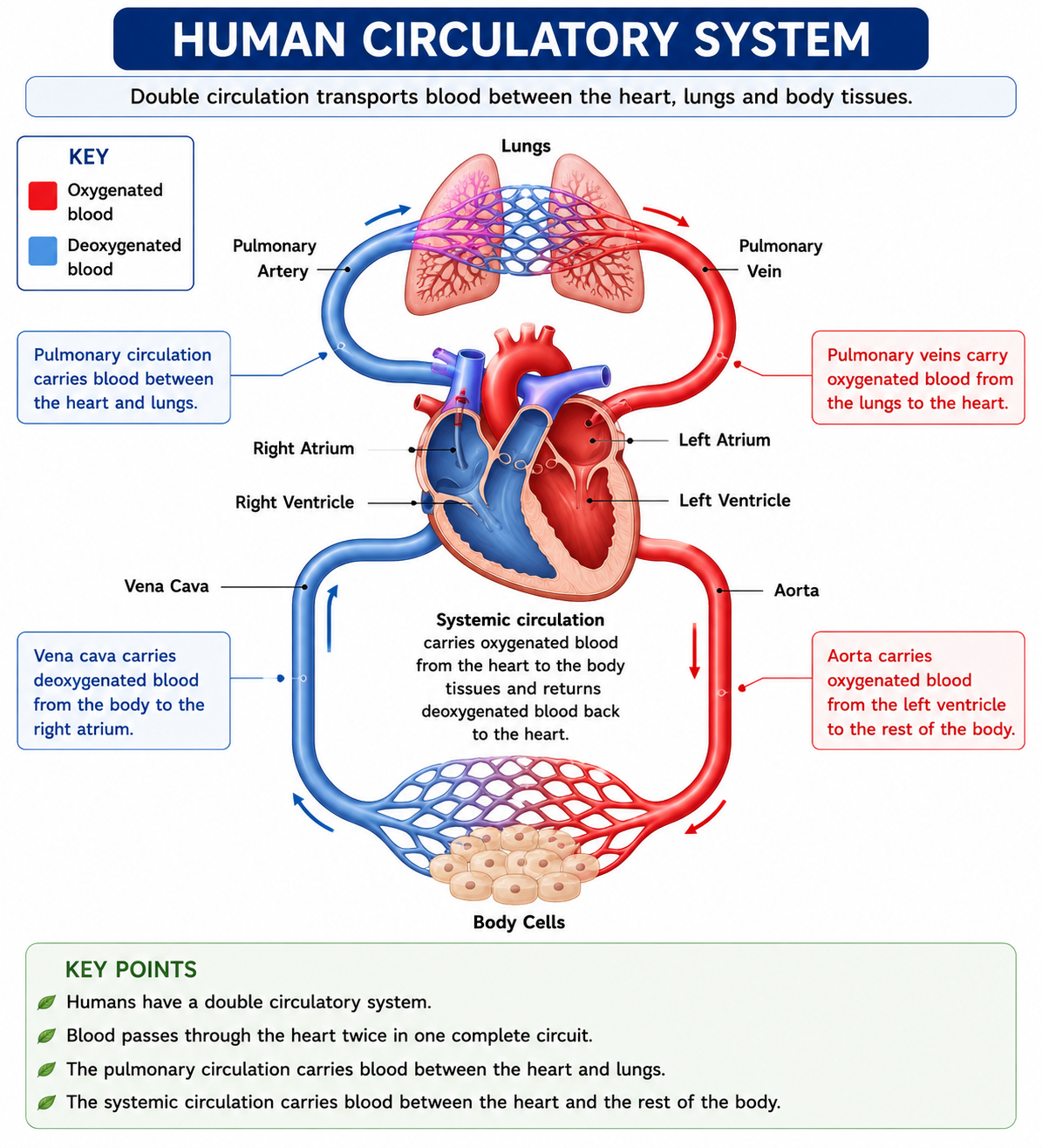
The circulatory system transports oxygen, nutrients, hormones, carbon dioxide, urea and heat around the body.
Double Circulation
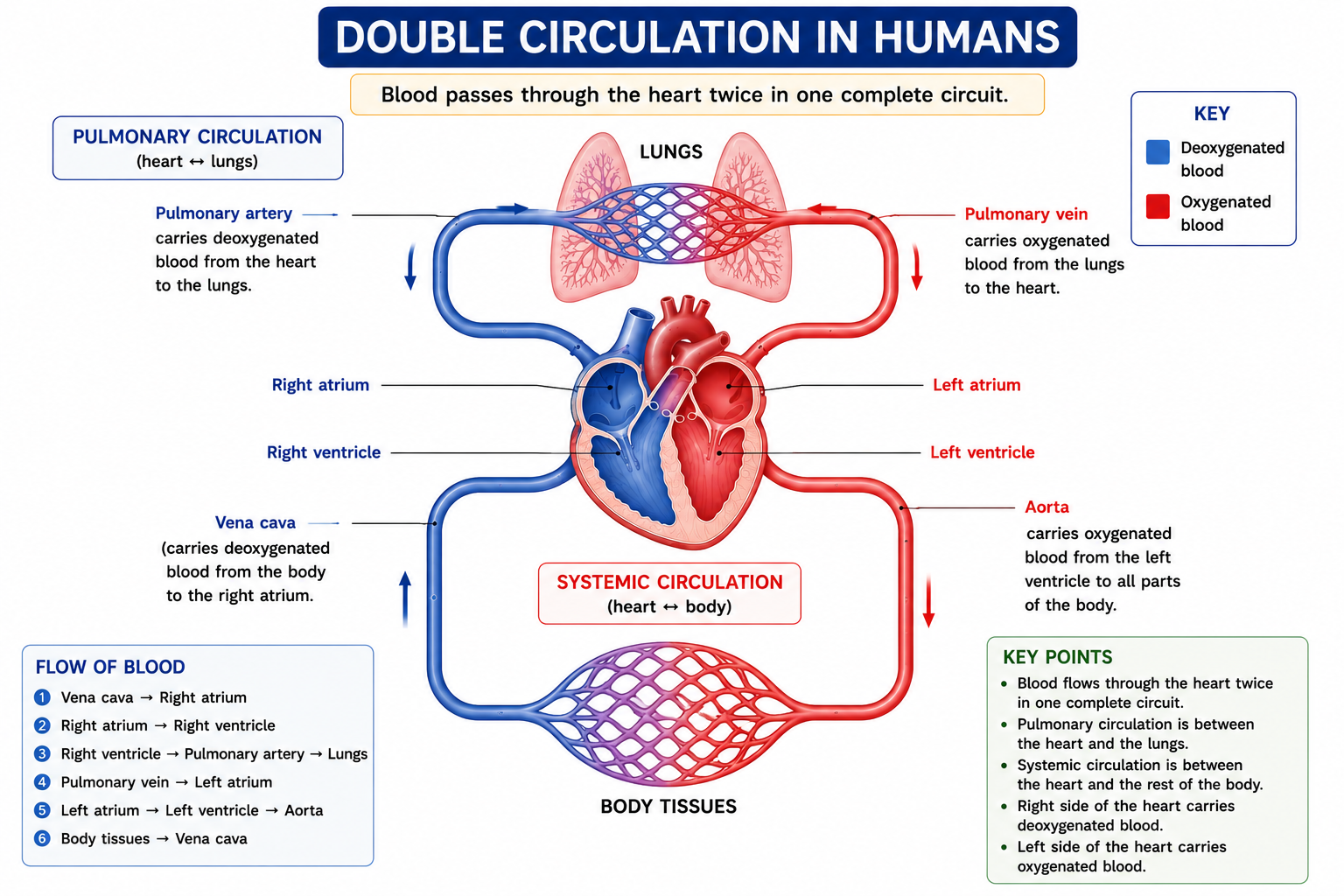
Humans have a double circulatory system because blood passes through the heart twice in one complete circuit.
| Circulation | Pathway | Function |
|---|---|---|
| Pulmonary circulation | Heart → Lungs → Heart | Blood gains oxygen and loses carbon dioxide. |
| Systemic circulation | Heart → Body → Heart | Oxygenated blood is delivered to body tissues. |
Structure of the Heart
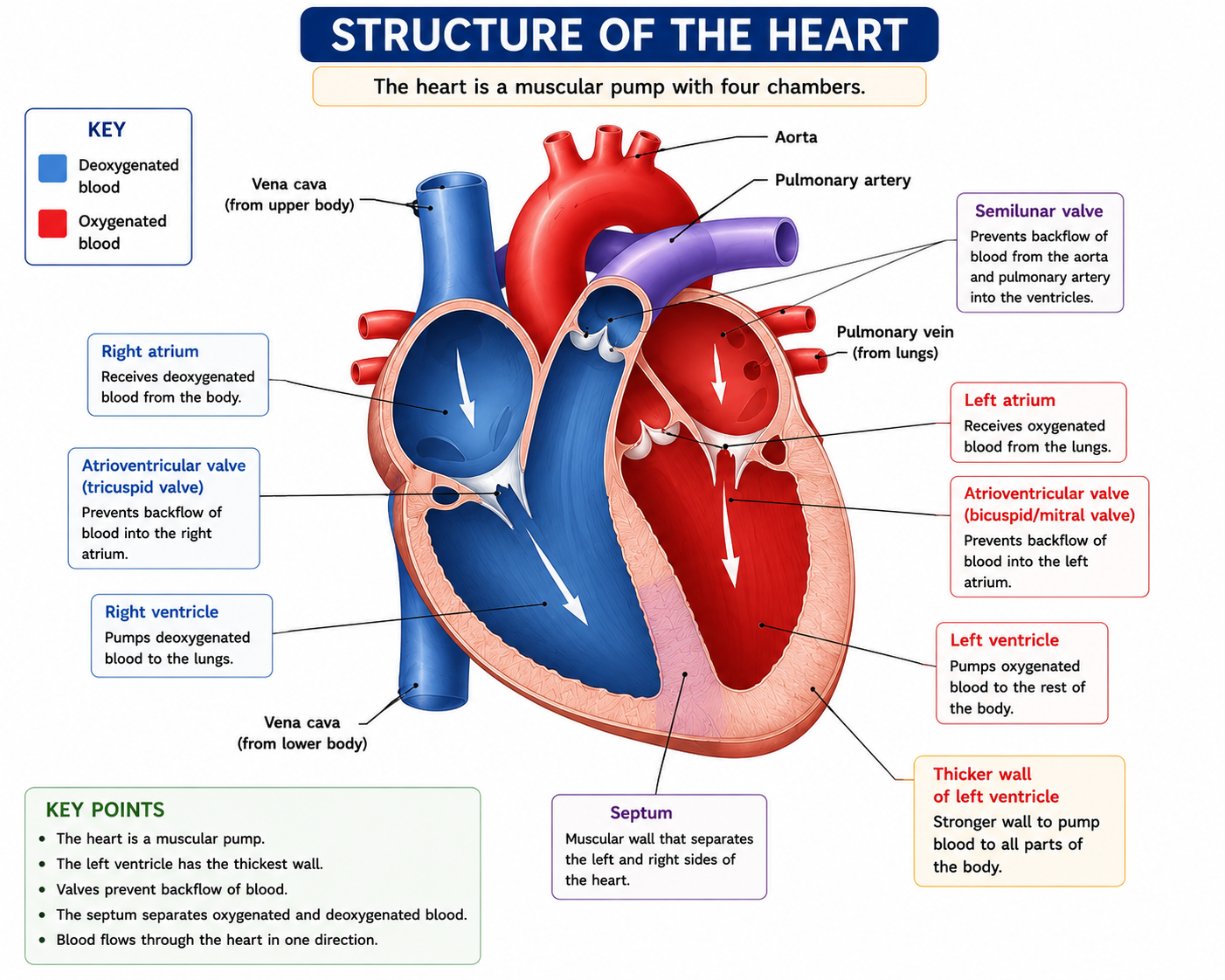
| Structure | Function |
|---|---|
| Right atrium | Receives deoxygenated blood from the body. |
| Right ventricle | Pumps deoxygenated blood to the lungs. |
| Left atrium | Receives oxygenated blood from the lungs. |
| Left ventricle | Pumps oxygenated blood to the whole body. |
| Valves | Prevent backflow of blood. |
| Septum | Separates oxygenated and deoxygenated blood. |
Blood Vessels
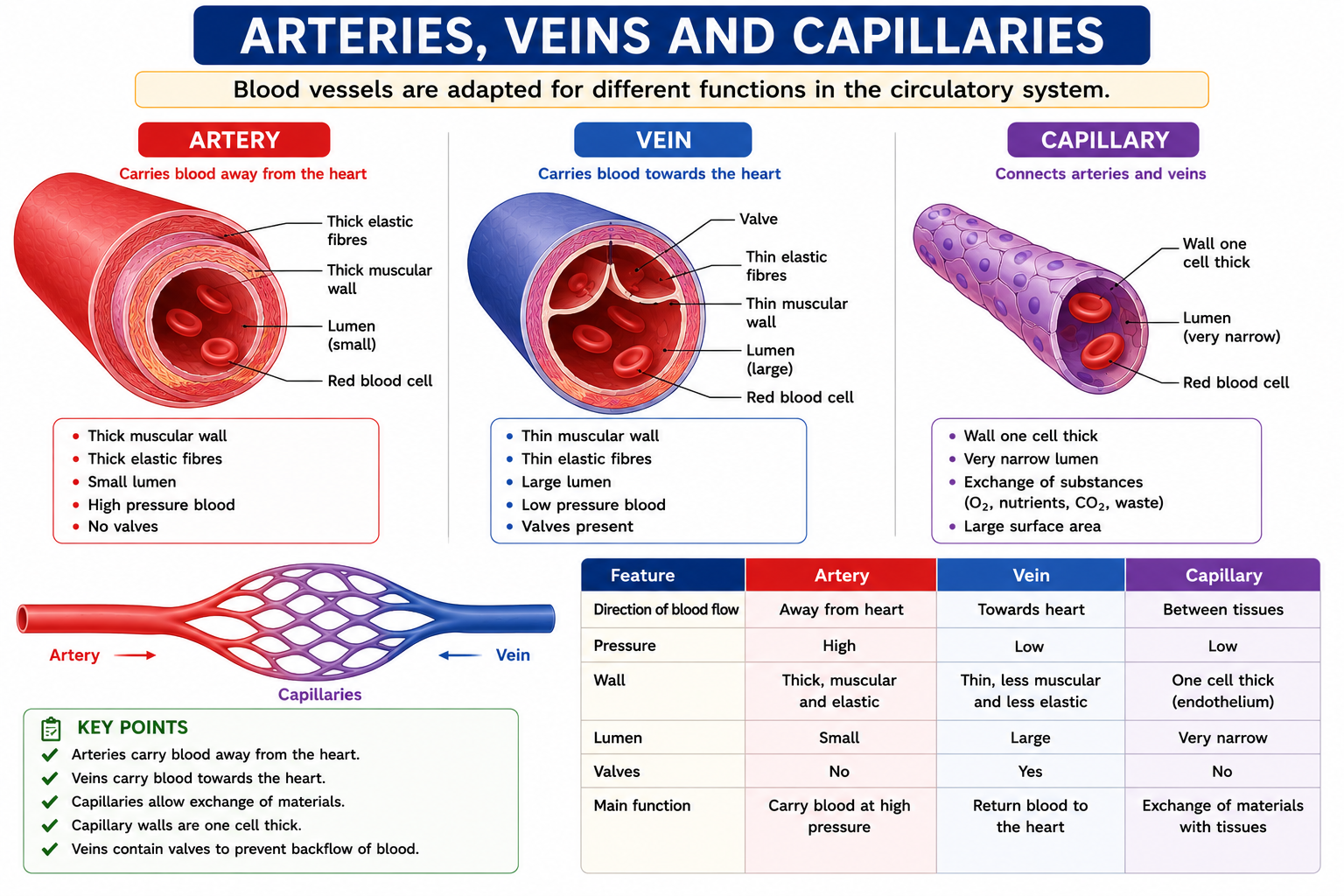
| Feature | Artery | Vein | Capillary |
|---|---|---|---|
| Direction | Away from heart | Towards heart | Between arteries and veins |
| Pressure | High | Low | Low |
| Wall | Thick, muscular and elastic | Thin, less muscular | One cell thick |
| Lumen | Small | Large | Very narrow |
| Valves | No | Yes | No |
Blood Components
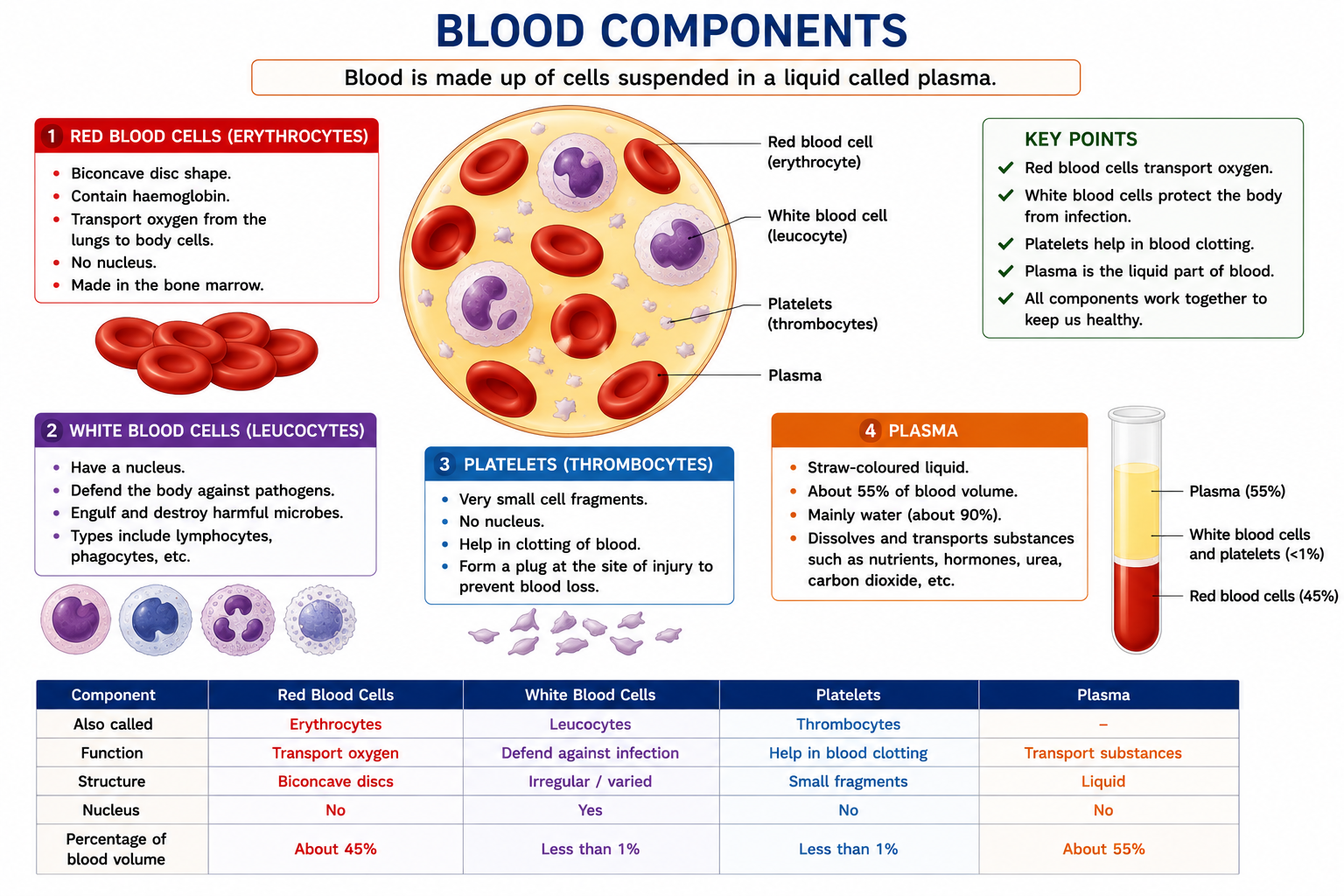
| Component | Function | Key Adaptation |
|---|---|---|
| Red blood cells | Transport oxygen. | Contain haemoglobin, biconcave shape, no nucleus. |
| White blood cells | Defend the body against pathogens. | Can engulf pathogens or produce antibodies. |
| Platelets | Help blood clotting. | Small cell fragments. |
| Plasma | Transports dissolved substances. | Liquid part of blood. |
Coronary Heart Disease
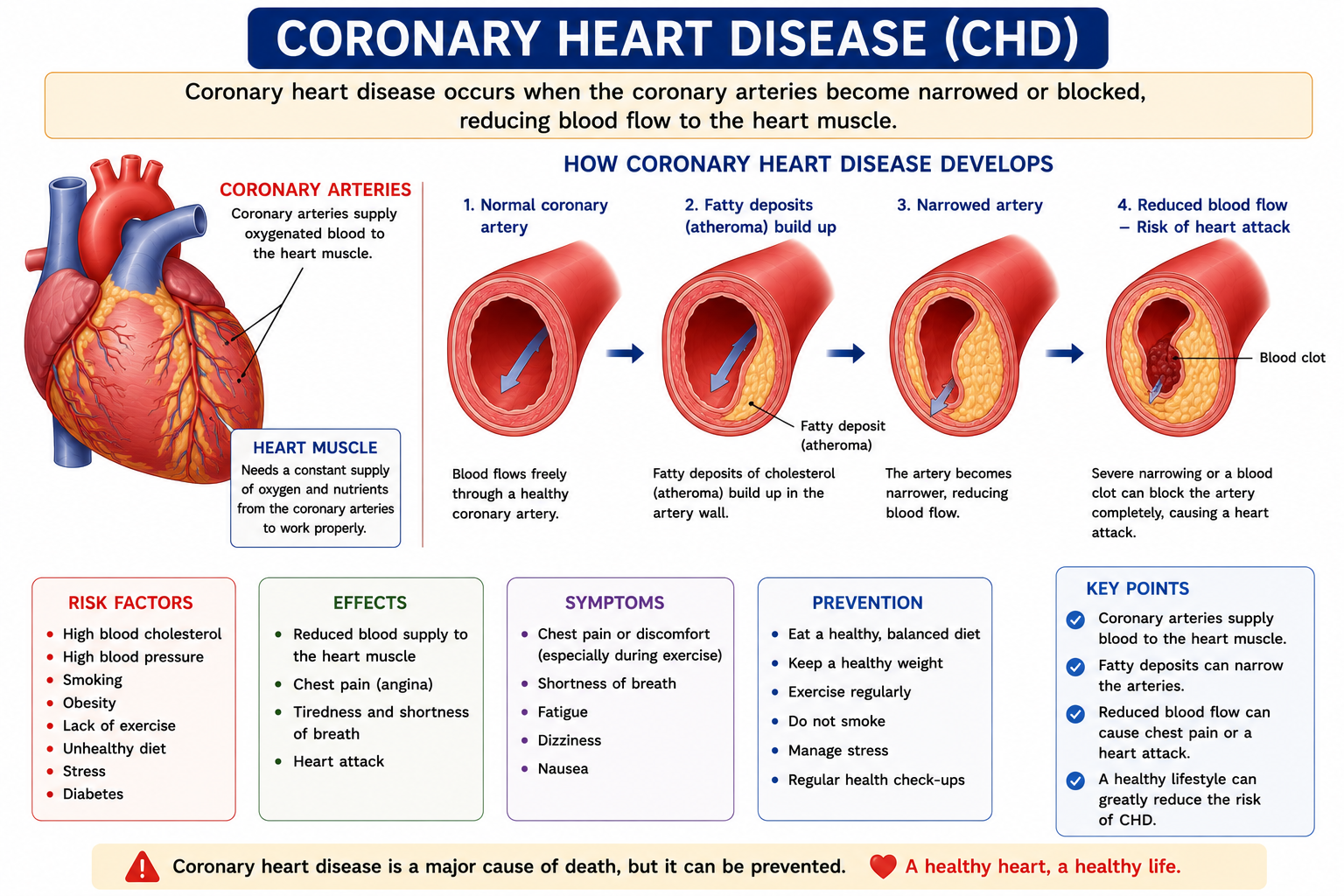
Coronary heart disease occurs when coronary arteries become narrowed or blocked by fatty deposits, reducing blood flow to the heart muscle.
Reduced oxygen supply to heart muscle can cause chest pain, heart attack, or death of heart tissue.
| Risk Factor | Effect |
|---|---|
| High blood cholesterol | Increases fatty deposits in arteries. |
| Smoking | Damages blood vessels and increases risk of clots. |
| High blood pressure | Damages artery walls. |
| Obesity | Increases risk of heart disease. |
| Lack of exercise | Increases risk of obesity and poor heart health. |
Exam Definitions
| Term | Definition |
|---|---|
| Double circulation | A system where blood passes through the heart twice in one complete circuit. |
| Artery | A blood vessel that carries blood away from the heart. |
| Vein | A blood vessel that carries blood towards the heart. |
| Capillary | A tiny blood vessel with walls one cell thick for exchange of substances. |
| Coronary arteries | Blood vessels that supply oxygenated blood to the heart muscle. |
| Coronary heart disease | Narrowing or blockage of coronary arteries, reducing blood flow to heart muscle. |
Common Exam Mistakes
- Writing that arteries always carry oxygenated blood. Pulmonary artery carries deoxygenated blood.
- Writing that veins always carry deoxygenated blood. Pulmonary vein carries oxygenated blood.
- Confusing left and right sides of the heart on diagrams.
- Forgetting that the left ventricle has the thickest wall.
- Saying capillaries have thick walls. They are one cell thick.
- Mixing up platelets and white blood cells.
Exam Style Questions and Answers
1. Define double circulation.
Double circulation is when blood passes through the heart twice in one complete circuit.
2. Why does the left ventricle have a thicker wall than the right ventricle?
It pumps blood at high pressure to the whole body, while the right ventricle only pumps blood to the lungs.
3. State the function of valves in the heart.
Valves prevent backflow of blood.
4. Compare arteries and veins.
Arteries carry blood away from the heart at high pressure and have thick muscular elastic walls. Veins carry blood towards the heart at low pressure and have valves.
5. Explain how capillaries are adapted for exchange.
They have walls one cell thick, a very narrow lumen and a large surface area, giving a short diffusion distance.
6. State the function of red blood cells.
Red blood cells transport oxygen using haemoglobin.
7. What causes coronary heart disease?
Fatty deposits build up in coronary arteries, narrowing them and reducing blood flow to heart muscle.
8. Give two risk factors for coronary heart disease.
Smoking and high blood cholesterol. Other correct answers include high blood pressure, obesity, lack of exercise and unhealthy diet.
Quick Revision Summary
- The circulatory system transports materials around the body.
- Humans have double circulation.
- Pulmonary circulation is between the heart and lungs.
- Systemic circulation is between the heart and body.
- The left ventricle has the thickest wall.
- Arteries carry blood away from the heart.
- Veins carry blood towards the heart and have valves.
- Capillaries allow exchange of substances.
- Red blood cells transport oxygen.
- Coronary heart disease reduces blood flow to the heart muscle.